
Views: 0 Author: Site Editor Publish Time: 2026-03-06 Origin: Site


Walk into any pizzeria anywhere in the world and you will notice something interesting: the pizza itself is usually round, but the pizza box that carries it is almost always square. At first glance, this might seem like a strange mismatch between shape and packaging. Why not make round boxes for round pizzas? The answer lies in the balance between manufacturing efficiency, structural strength, food safety, and delivery practicality. From our perspective in the packaging industry, the square pizza box is not a coincidence but the result of decades of practical design improvements. It is a solution that supports large-scale production, protects the product during transport, and helps restaurants operate efficiently during busy service hours.
When restaurants and delivery services rely heavily on takeaway orders, packaging becomes just as important as the food itself. A well-designed pizza box must keep the pizza hot, prevent grease leakage, protect toppings from damage, and remain easy to stack and transport. Square pizza boxes achieve all of these goals while also being economical to manufacture. Over time, this design has become the global standard for pizza packaging.
Understanding why pizza boxes are square reveals how packaging design evolves based on real operational needs rather than simple visual symmetry.
One of the most practical reasons for square pizza boxes comes from the manufacturing process itself.
Pizza boxes are typically made from corrugated cardboard sheets. These sheets are produced in large rectangular formats before they are cut and folded into boxes. Cutting square shapes from rectangular sheets is far more efficient than trying to produce circular boxes.
A circular box would require additional cutting steps and would waste more material between shapes. Square boxes allow manufacturers to maximize the use of every sheet of cardboard.
Square pizza boxes are usually made from a single piece of die-cut cardboard. The structure is designed so that the box can be folded quickly into shape.
This folding method allows pizza restaurants to assemble boxes rapidly during busy hours. Employees can prepare dozens of boxes in advance without complicated steps.
Because square boxes use cardboard more efficiently and require fewer manufacturing steps, they are significantly cheaper to produce than round boxes.
For restaurants that order thousands of boxes every month, this cost difference becomes very important.
Another major reason for the square design is structural stability.
The corners of a square box add strength to the overall structure. When pizza boxes are stacked during delivery or storage, the corners help distribute weight evenly.
A round box would not provide the same structural reinforcement. Without corners, the sides of the box would be more likely to collapse under pressure.
Delivery drivers often carry multiple pizza boxes at once. These boxes may be stacked on top of each other inside insulated delivery bags.
Square boxes stack neatly without sliding. Their flat edges and corners help keep the stack stable during transportation.
The stronger the box structure, the better the pizza is protected from pressure and movement. A stable box prevents toppings from sticking to the lid and keeps the pizza looking fresh when it reaches the customer.
Restaurant kitchens are busy environments where efficiency matters. Square pizza boxes support smoother operations in several ways.
Stacks of square pizza boxes take up less space and remain organized. They can be stored in tight kitchen areas without rolling or shifting.
Round boxes would create gaps between stacks and waste valuable storage space.
During busy service periods, restaurants often pre-fold pizza boxes in advance. Square boxes are easier to stack after folding, allowing employees to prepare large quantities quickly.
Packaging suppliers also benefit from square designs because flat-packed boxes can be stacked tightly during shipping.
This reduces transportation costs and allows suppliers to deliver large quantities of packaging materials efficiently.
The shape of the pizza box also affects the quality of the pizza during delivery.
Square boxes provide small empty spaces near the corners when holding a round pizza. These gaps allow hot air and steam to circulate inside the box.
This airflow helps prevent excessive moisture buildup, which could make the crust soggy.
The extra corner space inside a square box can also accommodate small items such as sauce containers or seasoning packets.
This convenience is helpful for restaurants that include dipping sauces or additional condiments with their orders.
Many pizza boxes include small ventilation holes. These holes allow steam to escape while maintaining the temperature of the pizza.
Proper ventilation ensures that the pizza remains crisp rather than becoming damp during delivery.
Speed and efficiency are essential for pizza restaurants, especially during peak hours.
Square pizza boxes are designed to fold quickly into shape. Restaurant staff can assemble them within seconds.
This speed is crucial when dozens of orders need to be prepared simultaneously.
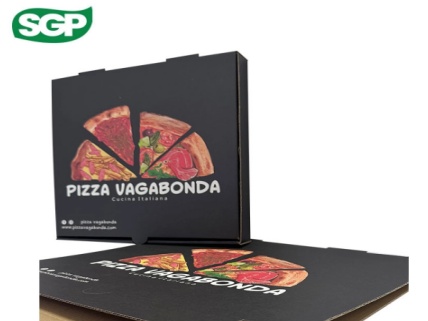
Flat square surfaces make it easy to print branding, logos, or promotional messages on the box.
Restaurants use these surfaces to strengthen brand recognition while delivering their products.
Square boxes allow restaurants to standardize packaging for different pizza sizes. This consistency simplifies ordering, storage, and kitchen operations.
Feature | Square Pizza Box | Round Pizza Box |
Manufacturing efficiency | High material efficiency | More cardboard waste |
Structural strength | Strong corner support | Less stable structure |
Stacking ability | Excellent stacking stability | Difficult to stack |
Storage efficiency | Compact and organized | Wastes space |
Production cost | Lower cost | Higher cost |
This comparison clearly shows why square boxes have become the industry standard.
While the square shape is important, the material used for pizza boxes is equally significant.
Corrugated cardboard helps maintain the temperature of the pizza during transport.
The fluted layer between cardboard sheets creates insulation that keeps the pizza warm for longer periods.
High-quality pizza boxes often include grease-resistant coatings. These coatings prevent oil from leaking through the cardboard.
This feature helps maintain cleanliness during delivery.
Food-grade cardboard ensures that the packaging remains safe for direct contact with hot food products.
Packaging manufacturers follow strict standards to guarantee food safety.
Although the square pizza box has remained largely unchanged for decades, manufacturers continue to refine its design.
Innovations include improved ventilation systems, stronger corrugated materials, and more environmentally friendly packaging options.
Many pizza boxes today are designed to be recyclable or biodegradable, supporting sustainability goals in the food service industry.
Packaging companies work closely with restaurants to develop customized box sizes, printing designs, and material solutions that meet specific operational needs.
The reason pizza boxes are square is not simply tradition. The design represents a practical solution that balances manufacturing efficiency, structural strength, storage convenience, and food quality protection. A pizza box must do much more than hold a pizza—it must protect the product during transport, support restaurant workflow, and maintain the freshness of the food until it reaches the customer.
From our experience in packaging design, the square pizza box remains one of the most efficient and reliable packaging solutions for the food delivery industry. Its simple geometry supports large-scale production, strong stacking capability, and effective heat retention.
At SGP Packaging, we focus on developing high-quality food packaging solutions that meet the needs of modern restaurants and delivery services. Our production capabilities allow us to supply durable pizza packaging designed for performance, safety, and brand presentation. If you are looking for reliable pizza box packaging solutions, our team is ready to help you explore packaging options tailored to your business requirements. Feel free to contact us to learn more about how we can support your packaging needs.
Square pizza boxes are easier to manufacture, stronger for stacking, and more efficient to store. They also reduce material waste during production.
Yes. The extra corner space inside a square pizza box allows better air circulation, which helps prevent moisture buildup and keeps the crust crisp.
Most pizza boxes are made from corrugated cardboard because it provides insulation, structural strength, and food-safe packaging.
Yes. Many packaging manufacturers offer custom printing options that allow restaurants to add logos, brand colors, and promotional designs to their pizza boxes.


