
Views: 0 Author: Site Editor Publish Time: 2026-07-13 Origin: Site


Standard corrugated cardboard absorbs steam and grease rapidly during transit. This absorption leads to structural collapse, rapid heat loss, and compromised food quality. When a box fails, the crust becomes soggy, and the cheese sticks to the lid. These operational failures directly impact restaurant margins through refunded orders, negative reviews, and diminished brand perception. Customers expect hot, intact meals, and poor packaging guarantees the opposite.
To solve this, restaurants are upgrading to the modern Waterproof Pizza Box. This technical packaging solution balances moisture retention, grease resistance, and thermal insulation. By utilizing specialized interior barriers, these boxes prevent oil and condensation from soaking into the paper fibers. This structural integrity allows for extended delivery radiuses, ensuring the food arrives exactly as it left the oven.
Material Engineering: Waterproof pizza packaging relies on specialized food-safe barriers (like PE, PLA, or clay coatings) to prevent moisture and grease absorption without trapping excess steam.
Operational ROI: Upgrading to a moisture resistant pizza box reduces structural failures during transit, allowing for safer stacking in delivery bags and improved heat retention.
Sustainability Trade-offs: Decision-makers must balance performance with environmental compliance, as traditional plastic-coated boxes face recycling limitations compared to newer compostable alternatives.
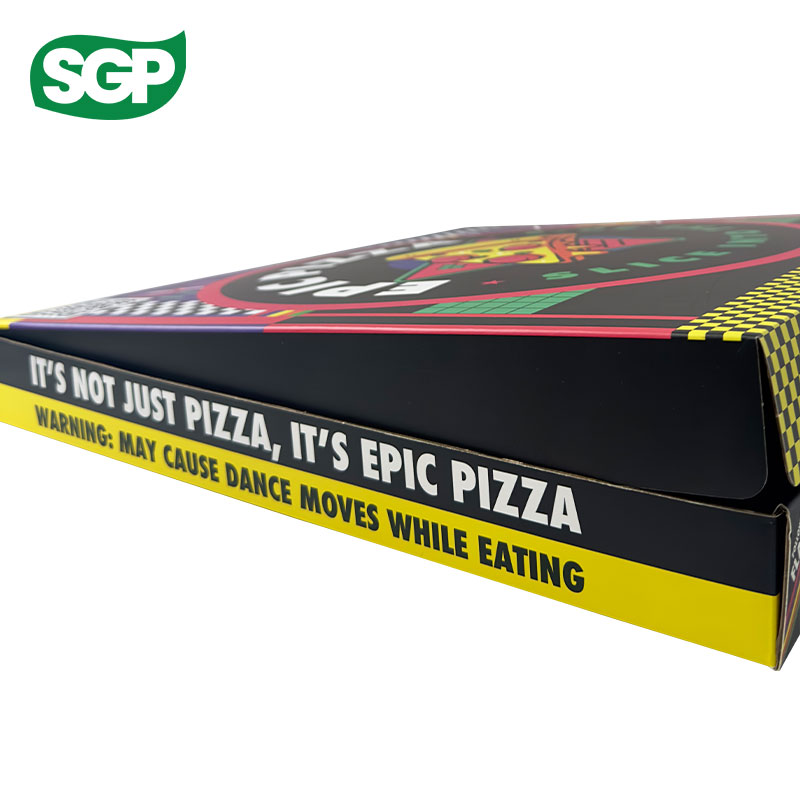
Brand Protection: Coated boxes offer superior surfaces for a full color food box presentation, preventing ink bleed and maintaining a premium unboxing experience.
There is a distinct difference between single-use corrugated waterproof pizza packaging intended for delivery and reusable plastic storage. Reusable containers, such as BPA-free dough proofing boxes or snap-on food storage bins, are built for airtight, watertight dough fermentation in the kitchen. They are heavy, rigid, and designed for repeated washing and stacking in walk-in coolers.
A true delivery use-case requires balancing low unit economics, thermal insulation, and breathability. Delivery boxes must be lightweight and disposable while actively managing the steam released by hot food. Proofing boxes trap moisture entirely, which would ruin a baked crust within minutes. The engineering behind a delivery carton focuses on transit survival, not long-term food storage or fermentation control.
Kitchen operators often misunderstand the thermal dynamics at play during the first ten minutes after a pie leaves the oven. The surface temperature exceeds 200 degrees Fahrenheit, releasing a massive volume of water vapor. If this vapor hits a cold, unventilated plastic lid, it condenses immediately and rains back down onto the food. Corrugated delivery cartons mitigate this by absorbing a tiny fraction of the moisture while venting the rest, but standard raw kraft paper absorbs too much, leading to structural failure.
Traditional uncoated B-flute or E-flute corrugated cardboard acts as a sponge. When exposed to hot food, the raw paper fibers immediately absorb condensation and oil. This softens the fluting, causing the box to sag. Treated alternatives apply a barrier over the kraft paper to block this absorption, maintaining the rigidity of the corrugated medium.
A reliable delivery pizza box must feature a dual-barrier requirement. It must repel water generated from the condensation of the hot crust and repel lipids from the melting cheese and cured meats. Handling both simultaneously ensures the structural integrity of the carton remains intact from the kitchen to the dining table. Grease penetration is measured using the TAPPI T 559 standard (often called the KIT test). A standard raw box scores a zero, meaning oil penetrates instantly. A properly coated box scores a 12, meaning it repels aggressive solvents and hot animal fats indefinitely.
Water absorption is measured using the Cobb test. This measures how much water a specific area of paper absorbs over a set time. Raw kraft paper has a high Cobb value, meaning it pulls water in rapidly. Coated barriers drop this value to near zero. When you combine a high KIT score with a low Cobb value, you get a carton that survives a forty-minute delivery route without softening, tearing, or collapsing under the weight of other orders.
Making a box completely airtight destroys food quality. Trapped steam condenses on the lid and drips back down, resulting in soggy crusts. Waterproof coatings must work in tandem with engineered ventilation holes. These vents allow excess steam to escape while the interior coating prevents the remaining humidity from soaking into the cardboard.
A dry box maintains its internal fluting structure. This intact fluting traps air, acting as a natural thermal barrier to keep the food hot. Conversely, a soggy box conducts heat away from the food, cooling it rapidly. Physical design innovations also prevent soggy food. Elevated embossed bottoms, raised grids, and specialized ventilation channels lift the crust away from pooled moisture and grease, maintaining crispness.
Consider the environment inside an insulated delivery bag. You have three hot pies stacked together. The bottom box bears the physical weight of the top two, plus the combined ambient humidity of all three orders venting into the confined space of the bag. If the bottom box lacks a moisture barrier, the ambient steam in the bag will soften its exterior, while the pie inside softens its interior. The result is a crushed bottom order. Barrier coatings prevent this dual-sided moisture attack.
A thin layer of food-safe PE plastic is applied to the interior kraft paper during production. This establishes an impermeable barrier against liquids and oils. The PE coating bonds directly to the paper substrate through an extrusion process, creating a smooth, highly resistant surface that will not delaminate under high heat.
This material stands as the industry standard for maximum grease and liquid leak resistance. It performs exceptionally well under high heat and heavy oil loads, making it ideal for deep-dish or meat-heavy orders. The PE layer also provides a slight reflective property, bouncing a small amount of radiant heat back toward the food.
However, environmental drawbacks exist. Separating PE from cardboard in standard municipal recycling facilities proves difficult. The pulping process struggles to break down the plastic film, leading to restrictions in regions with strict waste management regulations. Operators in these areas often face fines or customer backlash if they utilize non-recyclable packaging.
Plant-based bioplastics, derived from fermented plant starch like corn or sugarcane, serve as an alternative to petroleum-based PE. PLA linings offer a renewable approach to barrier creation. They provide comparable thermal stability and moisture resistance under standard delivery temperatures, functioning almost identically to PE in the short term.
The primary advantage of PLA is its industrial compostability. This aligns with strict local single-use plastic bans and appeals to environmentally conscious consumers. When sent to a commercial composting facility, the PLA breaks down alongside the paper fibers, leaving no microplastics behind.
Operators must understand the temperature limitations of PLA. While PE can withstand extreme heat without deforming, PLA begins to soften at lower thresholds. For standard delivery routes, this is rarely an issue, but if pies are held in warming ovens at 200 degrees Fahrenheit for extended periods before dispatch, PLA linings may exhibit slight tackiness. Proper kitchen workflow management mitigates this risk entirely.
Water-based barrier coatings and clay-coated kraft boards utilize mineral or aqueous dispersions to seal the paper fibers. These coatings are applied as a liquid during the paper milling process and dried, leaving a microscopic protective layer. They provide moderate moisture resistance, sufficient for standard orders without excessive oil pooling.
Aqueous-coated boxes boast superior recyclability and repulpability. They do not require specialized separation facilities, making them a strong eco-friendly middle-ground solution. They offer adequate protection while maintaining full compliance with standard paper recycling streams. The repulping process easily washes away the water-based dispersion, allowing the kraft fibers to be recovered and reused.
Comparison of Barrier Coating Technologies | ||||
Coating Type | Grease Resistance (KIT Score) | Moisture Resistance | End-of-Life Disposal | Best Use Case |
|---|---|---|---|---|
Polyethylene (PE) | 12 (Maximum) | Excellent | Landfill (Rarely Recyclable) | Heavy meat pies, deep dish, long delivery routes |
Polylactic Acid (PLA) | 10 - 12 | High | Industrial Compostable | Eco-conscious brands, standard delivery times |
Aqueous Dispersion | 8 - 10 | Moderate | Widely Recyclable | Thin crust, standard cheese, strict recycling zones |
Uncoated Raw Kraft | 0 | Poor | Recyclable (if clean) | Dine-in leftovers only |
Moisture resistance directly correlates to crush resistance. Waterproof linings prevent the flute structure from softening when exposed to steam. This rigidity allows multiple boxes to be safely stacked in a single delivery bag without the bottom box collapsing under the weight. The Edge Crush Test (ECT) measures the cross-directional crushing force a corrugated board can withstand. A moisture-compromised board loses up to 50% of its ECT strength within ten minutes.
Matching box depth and size to specific food styles is critical. A deep dish pie requires higher rigidity and stronger moisture barriers than a thin crust. Proper sizing prevents the food from shifting during transit, minimizes structural damage, and optimizes heat retention by reducing empty air space within the carton. If a box is too large, the excess air volume cools the food faster. If it is too shallow, the cheese adheres to the lid.
Operators must also consider the flute profile. E-flute provides a thinner, more rigid board with excellent printability, making it ideal for coated applications. B-flute is thicker and offers slightly better thermal insulation but takes up more storage space in the kitchen. When applying a barrier coating, E-flute often performs better because the coating adds the necessary moisture resistance that a thinner board typically lacks.
Regulatory requirements from the FDA and EFSA govern food-contact substances (FCS). Barrier coatings must meet these strict standards to ensure consumer safety. It is vital to verify that barrier coatings do not migrate into the food when exposed to high temperatures up to 200°F (93°C). Migration testing involves exposing the coated board to food simulants (like vegetable oil or acetic acid) at elevated temperatures to measure any chemical transfer.
Eco-friendly printing practices further enhance safety. Applying non-toxic, food-safe water-based inks to coated substrates prevents chemical leaching. This ensures vibrant print quality without compromising the safety of the enclosed meal. UV-cured inks, while bright, often contain photoinitiators that can migrate into food if not properly cured or if applied to the interior of the carton.
Kitchen managers must request compliance certificates from their packaging suppliers. A moisture resistant pizza box is only valuable if it is legally compliant. Using non-compliant industrial coatings to save money exposes the restaurant to severe liability and health code violations.
Modern delivery requires chain-of-custody safety. Secure designs utilize adhesive single-use seals and integrated tear strips to guarantee the package remains unopened until it reaches the customer. This builds trust and ensures food safety, especially when utilizing third-party delivery drivers who are not direct employees of the restaurant.
Specialized adhesives are engineered to adhere securely to waterproof and grease-resistant exterior coatings. Standard tape often slips or fails due to condensation on coated surfaces. Tamper-evident seals designed for these specific substrates ensure the package remains locked during the entire delivery route. These labels use aggressive hot-melt adhesives that bite into the barrier coating, tearing the paper fibers if removal is attempted.
Identify the Substrate: Determine if the exterior of the box has an aqueous or PE coating.
Select the Adhesive: Choose a tamper-evident label with a high-tack hot-melt adhesive designed for low-surface-energy materials.
Application Protocol: Train kitchen staff to apply the seal firmly across the opening flap immediately after boxing the hot food.
Transit Verification: Instruct drivers to carry the boxes by the bottom to avoid stressing the seal during transport.
Moisture-resistant exterior coatings prevent ink absorption into the paper fibers. This results in sharper, more vibrant branding compared to porous raw kraft. A full color food box printed on a coated substrate maintains its visual appeal regardless of the environmental conditions during transit. The coating acts as a primer, keeping the ink on the surface rather than letting it bleed into the corrugated fluting.
Waterproof barriers prevent internal steam from reaching the exterior. This eliminates the risk of water-based inks bleeding onto customers' hands, clothing, or furniture. The aesthetic durability of a clean, unblemished package serves as a critical component of customer retention and perceived value. When a customer pays a premium for delivery, handing them a grease-stained, sagging, faded box immediately degrades their perception of the meal inside.
Flexographic printing is the standard for corrugated cartons, but printing on a coated board requires specific ink formulations. The ink must dry rapidly on the non-porous surface to prevent smudging during the manufacturing process. High-volume operations often utilize pre-printed linerboards that are then corrugated and coated, ensuring the highest possible graphic fidelity. This process allows for photographic-quality images and complex brand colors that raw kraft simply cannot support.
Evaluating the unit economics involves comparing standard corrugated boxes, PE-coated boxes, and PLA or aqueous-coated alternatives. While untreated cardboard presents the lowest initial expenditure, the operational fallout often negates these savings. PE-coated options offer a moderate investment with high durability, whereas PLA and aqueous coatings represent premium, eco-friendly investments. The upfront cost per unit is higher, but the reduction in secondary packaging materials offsets this.
Calculating ROI requires looking at hidden operational efficiencies. A coated carton reduces the need for double-boxing heavy orders or inserting wax paper liners. It drastically lowers customer refunds issued for damaged or soggy food. Furthermore, superior heat retention expands the viable delivery radius, allowing restaurants to reach more customers without sacrificing quality. A five-mile delivery radius can often be expanded to seven miles simply by upgrading the thermal and moisture retention capabilities of the packaging.
Implementation requires strategic planning. Procurement teams must account for minimum order quantities (MOQs) when requesting custom-coated boxes. Proper storage protocols must be established, such as avoiding extreme warehouse humidity before use, to maintain the integrity of the unformed cartons. Storing coated boxes directly on concrete floors can cause the bottom layers to warp, so pallets and climate-controlled dry storage are mandatory for maintaining inventory quality.
Upgrading your packaging infrastructure directly impacts food quality, customer satisfaction, and operational efficiency. A coated carton prevents structural failure, retains heat, and protects your brand image from the kitchen to the customer's table.
Audit your current delivery failure rates to determine how many refunds are tied to cold or crushed food.
Order sample batches of PE, PLA, and aqueous-coated cartons to run live stress tests in your own kitchen.
Verify your local municipal waste regulations to ensure you select a coating that complies with regional recycling or composting laws.
Train your kitchen staff on proper folding and venting techniques to maximize the thermodynamic benefits of the new packaging.
A: A moisture-resistant box features internal barrier coatings, such as PE or aqueous solutions. These coatings block oil and condensation, whereas standard boxes use raw, porous cardboard that absorbs liquids, softens the fluting, and collapses under weight.
A: It depends on the specific coating applied to the board. Boxes with repulpable aqueous coatings are generally recyclable in standard facilities. Traditional PE plastic linings are difficult to separate from the paper fibers and are often rejected by municipal recyclers.
A: No. A delivery box is a single-use corrugated carton designed for thermal insulation and steam ventilation during transit. A dough proofing box is a heavy, reusable, airtight plastic container used exclusively in kitchens for controlled yeast fermentation.
A: Not if the carton is designed correctly. Engineered ventilation holes and raised bottom grids allow excess steam to escape. The waterproof coating blocks grease and condensation from soaking the box, keeping the crust crisp and the box rigid.
A: PE coatings offer the highest performance for grease and liquid resistance, making them ideal for heavy orders. PLA and aqueous coatings provide excellent eco-friendly alternatives with moderate to high resistance and better compostability or recyclability profiles.
A: Yes. Coated exteriors actually improve print fidelity by preventing ink absorption. They allow for the use of food-safe water-based inks and prevent internal steam from causing the ink to bleed or smudge during the delivery process.
A: They utilize specialized hot-melt adhesives designed specifically for low-surface-energy coated substrates. These adhesives bond securely to the grease-resistant surface, ensuring tear-strips and security seals do not slip or fail due to condensation.


