
Views: 0 Author: Site Editor Publish Time: 2026-07-29 Origin: Site


Food-contact packaging carries significant operational and legal stakes. A pizza box serves as much more than a simple transport vessel. It acts as a direct food-contact surface that directly impacts consumer health, product integrity, and brand liability. Buyers often prioritize unit cost and structural durability over chemical safety. Unvetted suppliers introduce hidden risks, including chemical leaching from PFAS, heavy metal contamination from non-compliant inks, and severe microbiological risks from poor facility hygiene. You need a structured evaluation framework to vet a pizza packaging box manufacturer properly. This guide details the exact regulatory, material, and facility standards required to ensure compliant, risk-free procurement. We will explore FDA rules, facility hygiene, and material safety so you can protect your customers and your brand by demanding strict compliance.
Direct food-contact packaging requires strict adherence to FDA regulations (or regional equivalents) and ideally GFSI-recognized certifications (e.g., SQF, BRCGS).
Material safety hinges on the elimination of harmful chemicals like PFAS and the strict use of verified food-grade inks, adhesives, and coatings.
Facility hygiene is non-negotiable; a qualified manufacturer must demonstrate rigorous moisture control, physical architectural isolation of food-safe areas, pest management, and batch traceability.
Consumer safety extends to reheating; manufacturers must provide clear thermal tolerances to prevent toxic migration when boxes are exposed to residential ovens or microwaves.
Procurement teams must demand verifiable documentation, including Letters of Guaranty and migration testing results, before finalizing any supplier contract.
Compliance means preventing the transfer of harmful substances from packaging to food. Hot, grease-heavy food accelerates chemical migration. You must establish strict baselines for safety. The baseline requirement is preventing the transfer of harmful substances from the packaging to the food under extreme heat and moisture conditions.
The FDA outlines strict rules in the Code of Federal Regulations Title 21. These rules govern indirect food additives and food-contact substances. A pizza box features both direct and indirect contact surfaces. The inside bottom touches the food directly. The lid acts as an indirect contact surface until condensation occurs. Hot, greasy pizza creates steam. This steam accelerates chemical migration from the cardboard into the cheese and crust. Manufacturers must use materials approved for high-heat, high-moisture environments. You cannot rely on standard shipping box regulations for food contact. The chemical composition of the paperboard, the adhesives holding the flutes together, and the inks printed on the surface must all pass specific migration thresholds.
Migration testing simulates the worst-case scenario. Laboratories expose the packaging material to food simulants like vegetable oil or acetic acid at elevated temperatures. They measure how many milligrams of packaging components transfer into the simulant. If the transfer exceeds FDA limits, the material fails. You must request these specific migration test results from your supplier. Do not accept generic safety data sheets as proof of FDA compliance for direct food contact.
Self-reported FDA compliance falls short for enterprise procurement. You need third-party verification. Global Food Safety Initiative certifications provide this proof. SQF, BRCGS, and FSSC 22000 are the gold standards. These certifications prove a manufacturer commits to continuous food-safety management. Auditors inspect facilities regularly. They verify hygiene, traceability, and material safety. You reduce liability by partnering with a certified facility.
An SQF or BRCGS audit goes far beyond basic cleanliness. Auditors review the facility's Hazard Analysis and Critical Control Points plan. They check if the manufacturer has identified chemical, biological, and physical hazards in their specific process. For example, they verify that glass light fixtures above the corrugator are shatterproof to prevent physical contamination. They check the calibration of moisture sensors to ensure the board stays dry enough to prevent microbial growth. Demanding a GFSI certificate ensures your supplier operates under a rigorous, internationally recognized safety framework.
Fresh pizzerias and industrial frozen food lines require different materials. Hot delivery boxes must withstand steam and grease without collapsing. Frozen pizza packaging faces different challenges. It requires moisture barrier integrity at sub-zero temperatures. The cardboard must offer structural impact resistance during automated filling. It must also comply with high-speed packaging machinery constraints. You must specify your exact use case when evaluating suppliers.
Requirement | Hot Delivery Pizza Box | Frozen Pizza Packaging |
|---|---|---|
Temperature Tolerance | High heat (up to 200°F) | Sub-zero freezing (-20°F) |
Moisture Management | Steam venting, grease resistance | Condensation blocking, frost resistance |
Structural Integrity | Stacking strength while hot and damp | Impact resistance during automated transit |
Barrier Coating | PFAS-free grease barrier | Poly-coating or specialized moisture barrier |
Machinability | Manual folding speed | High-speed automated cartoning |
Different substrate materials offer varying safety profiles. High heat and moisture expose material weaknesses quickly. You must evaluate fiber origins carefully. The raw materials dictate the baseline safety of the final product.
Recycled corrugated materials carry inherent risks. They often have unknown origins. They may contain residual mineral oils like MOSH and MOAH. Heavy metals from old inks can survive the recycling process. Virgin kraft paper provides the safest option for direct contact. Recycled content remains acceptable only if the manufacturer applies a functional barrier.
MOSH and MOAH contamination is a severe issue in recycled paperboard. These mineral oil hydrocarbons originate from newspaper inks and commercial printing chemicals mixed into the recycling stream. When hot pizza sits on recycled board, these volatile compounds vaporize and migrate into the food. European regulators have already established strict limits on mineral oil migration. To mitigate this, you must specify virgin kraft liners for the inside of the box. If you use recycled fluting or outer liners, ensure the inner virgin layer is thick enough to act as a functional barrier against migration.
Corrugated shipping and delivery containers must never see reuse. This is a strict baseline rule. Repurposing boxes introduces severe biological and chemical risks. Cross-contamination occurs instantly. Bacteria thrive in grease-soaked cardboard. You must enforce single-use policies. Encourage proper post-consumer recycling instead.
Once a box absorbs grease and moisture, its structural integrity degrades. More importantly, the organic matter trapped in the paper fibers becomes a breeding ground for pathogens. Even if a box looks clean, microscopic food particles remain. Reusing these containers for food storage or secondary transport violates basic health codes. Your packaging specifications should explicitly state the single-use nature of the product to protect your liability.
The industry is shifting away from Per- and Polyfluoroalkyl Substances. Manufacturers traditionally used PFAS for grease resistance. Regulators are banning these forever chemicals globally. You must verify that your supplier uses safe alternatives. Ask for documentation proving the use of natural or FDA-approved synthetic grease barriers. Sourcing food-safe pizza packaging depends entirely on PFAS-free material sourcing.
Testing for PFAS requires specialized laboratory analysis. You cannot determine their presence visually. Request a total fluorine test report from your supplier. This test measures the total amount of fluorine in the packaging, which serves as a proxy for PFAS content. Acceptable levels vary by jurisdiction, but aiming for non-detectable levels is the safest approach. Modern alternatives include water-based polymer coatings and mechanically refined high-density paper that naturally resists grease penetration without chemical additives.
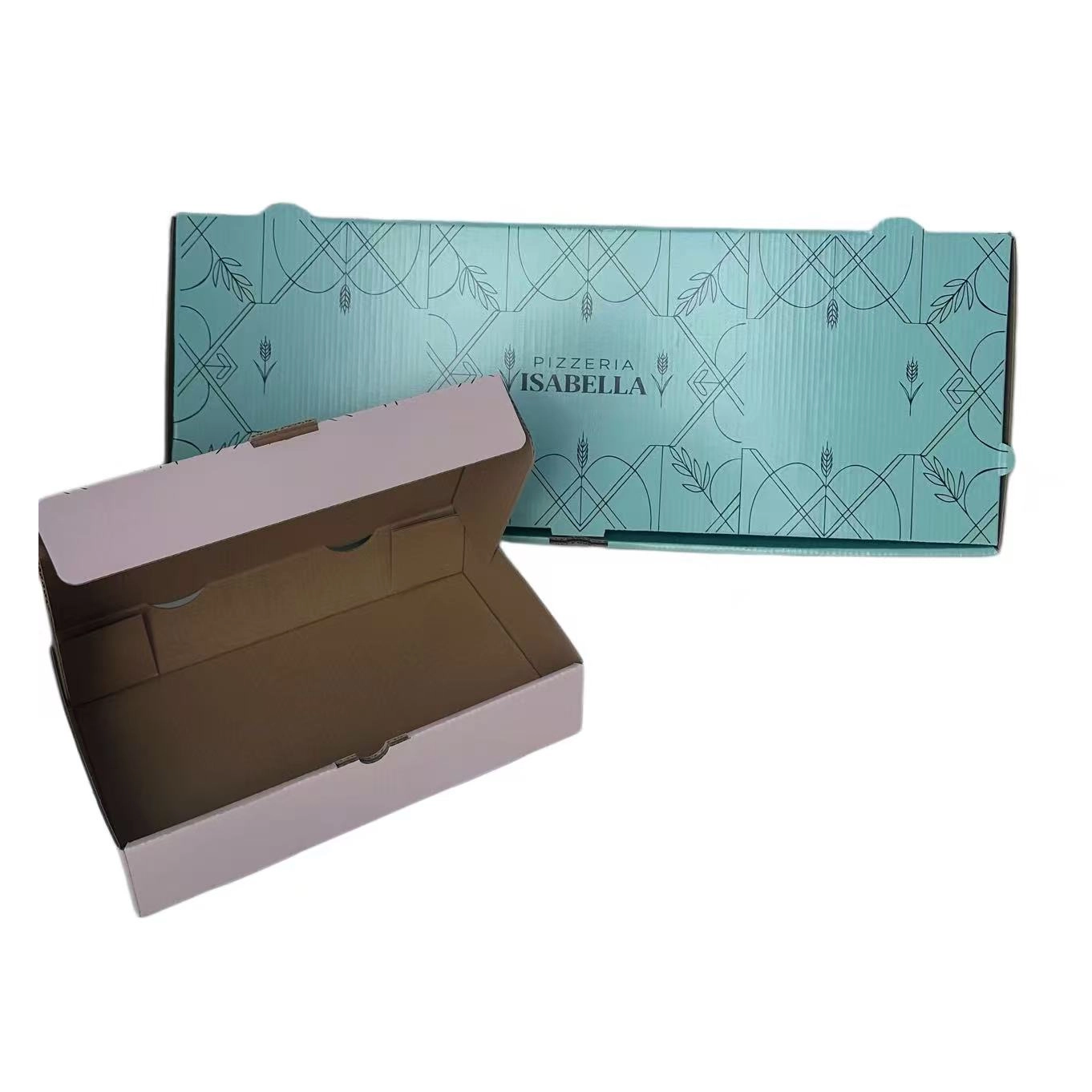
Chemical components used in box assembly require strict assessment. Branding must never compromise consumer health. The visual appeal of your packaging should not introduce toxic elements to the food.
You must specify inks certified for food contact. Avoid petroleum-based inks completely. They often contain heavy metals. Water-based and soy-based inks offer significant safety advantages. They perform well for custom pizza takeout boxes. Vegetable-based inks reduce toxic migration risks while maintaining vibrant brand colors.
When auditing ink safety, request the exact formulation details. Ensure the pigments do not contain lead, cadmium, or hexavalent chromium. Water-based flexographic inks are the industry standard for corrugated printing. They dry quickly through evaporation and absorption, leaving a stable, non-toxic pigment layer. Soy-based inks offer excellent color density but require slightly longer drying times. Both options are vastly superior to older, solvent-based systems that release volatile organic compounds during the printing process and potentially during food transport.
Printing on the inside of the box carries specific risks. Heat and condensation maximize migration potential. You must use functional barriers if interior printing is necessary. Alternatively, mandate specific FDA-approved direct-contact inks. Never allow standard exterior inks on interior surfaces.
If your marketing team insists on interior graphics, you must implement strict controls. The ink must be explicitly formulated and tested for direct food contact under high-heat conditions. Even then, it is safer to apply a food-grade varnish or coating over the interior print to lock the pigments in place. The safest approach remains keeping all printing on the exterior surfaces, relying on the virgin kraft inner liner to protect the food.
The corrugation process relies on adhesives. These glues must remain stable under high heat. They must be non-toxic. Safe coating options prevent cardboard degradation. They block grease without introducing chemical hazards. Evaluate the safety data sheets for all applied coatings.
Starch-based adhesives are the standard in corrugated manufacturing. They are derived from corn or wheat and are inherently safe for food packaging. However, manufacturers sometimes add synthetic resins to the starch to improve moisture resistance. You must verify that these wet-strength additives comply with FDA regulations for food contact. Similarly, any anti-slip or gloss coatings applied to the exterior must not contain harmful plasticizers that could migrate through the board or transfer to the food via the hands of the consumer.
Consumers often reheat leftover pizza in the box. They use ovens or microwaves. Corrugated materials, inks, and adhesives have specific heat limits. Manufacturers must print clear safety instructions. They should include thermal threshold warnings and handling disclaimers. This prevents thermal decomposition and toxic off-gassing in residential kitchens.
Standard corrugated board can ignite at temperatures above 400°F. Microwaving a box with metallic inks or foil stamping will cause arcing and fire. Even at lower temperatures, adhesives can melt and inks can vaporize. Your packaging must include explicit instructions, such as "Do not heat in oven" or "Remove pizza from box before microwaving." This simple step protects consumers from chemical exposure and protects your brand from liability claims related to improper reheating.
Environmental risks occur long before boxes reach the restaurant. Manufacturing hygiene dictates final product safety. A dirty plant produces contaminated packaging, regardless of the raw materials used.
A reliable pizza delivery box supplier maintains physically isolated food-safe areas. This zone requires specific construction standards. It needs four enclosed walls and self-closing doors. Dedicated ventilation systems prevent airborne cross-contamination. Dust and debris from other manufacturing lines must not enter this space.
The physical isolation of the food-safe zone is critical. Forklifts moving between standard industrial packaging lines and the food-safe area can track in dirt, oil, and chemical residues. The ventilation system should maintain positive air pressure inside the clean room, ensuring that when doors open, clean air pushes out, preventing contaminated air from entering. Employees working in this zone must follow strict hygiene protocols, including wearing hairnets, washing hands frequently, and avoiding eating or drinking near the production equipment.
Corrugated board possesses natural antimicrobial properties. The high heat of the manufacturing process kills most bacteria. However, this protection lasts only if the board remains strictly dry. Facility climate-control standards must prevent mold and mildew. Proper ventilation stops bacterial growth during storage and transport.
The corrugator operates at temperatures exceeding 350°F, effectively sterilizing the paperboard as it forms the flutes. The danger arises during cooling and storage. If the facility lacks humidity control, the dry paper acts like a sponge, absorbing moisture from the air. This moisture, combined with the starch adhesive, creates an ideal environment for mold spores to germinate. Warehouses must maintain relative humidity below 60% and ensure proper air circulation around the stacked pallets to preserve the board's hygienic state.
Active pest management protocols are mandatory. Environmental monitoring programs ensure ongoing compliance. Lot-level traceability is equally critical. If contamination occurs, the manufacturer must isolate the affected batch immediately. Barcoding and strict inventory controls enable rapid recalls.
Rodents and insects are drawn to the starch adhesives used in corrugated manufacturing. A robust pest control program involves exterior bait stations, interior traps, and regular inspections by certified professionals. Traceability requires assigning a unique lot number to every pallet of finished boxes. This number must link back to the specific rolls of paper, batches of ink, and adhesive formulations used during that production run. In the event of a safety issue, you must be able to identify and isolate the affected packaging within hours, not days.
Sustainability goals often clash with strict hygiene requirements. You must navigate these conceptual trade-offs carefully. You cannot sacrifice consumer safety for environmental marketing claims.
BPI certification verifies compostability. However, compostable materials still need grease resistance. Achieving effective grease resistance without toxic chemicals remains challenging. Many natural barriers fail under high heat. You must test eco-friendly pizza boxes rigorously to ensure they hold up to greasy foods.
The push for compostable packaging has led to the development of new barrier coatings based on natural waxes or biopolymers. While these materials break down in commercial composting facilities, their performance under the extreme heat and grease of a fresh pizza varies wildly. Some biopolymers melt or degrade when exposed to 200°F steam, allowing grease to soak through the board and compromise the box's structural integrity. You must conduct real-world performance testing, placing actual hot pizzas in the proposed eco-friendly boxes and evaluating them after a standard 30-minute delivery window.
Alternative materials like bagasse and bamboo offer sustainable options. They must meet the same rigorous migration standards as traditional corrugated boxes. Microbial testing remains essential. Ensure sustainable materials do not compromise hygiene during extended delivery times.
Bagasse, derived from sugarcane waste, and bamboo pulp are gaining popularity as tree-free alternatives. However, the pulping and molding processes for these materials differ significantly from traditional paperboard. You must verify that the chemicals used to process these alternative fibers do not leave harmful residues. Additionally, molded fiber products often have a rougher surface texture, which can harbor bacteria if not properly dried and stored. Demand the same level of FDA compliance documentation and migration testing for alternative materials as you would for standard corrugated board.
Procurement teams need an actionable checklist during the final selection phase. Documentation proves compliance. Do not rely on marketing brochures or verbal assurances when evaluating a new manufacturing partner.
Demand a Letter of Guaranty stating materials meet FDA guidelines. Require third-party migration testing results. Ask for compliance certificates for all inks and coatings. Verify up-to-date GFSI audit certificates. Do not accept verbal assurances.
The Letter of Guaranty is a legally binding document. It states that the supplier guarantees their product complies with all applicable food safety regulations. This document shifts the liability burden back to the manufacturer if a contamination event occurs due to their materials. Review the GFSI audit report carefully. Look at the minor non-conformances noted by the auditor. A facility with repeated minor issues related to pest control or moisture management presents a higher risk, even if they ultimately passed the audit.
Watch for specific warning signs. An inability to trace raw material origins is a major red flag. A lack of physical isolation in the production area indicates poor hygiene. Vague answers about ink composition suggest hidden risks. Resistance to facility audits should end the negotiation immediately.
If a supplier refuses to let you or a third-party auditor inspect their facility, walk away. Transparency is non-negotiable in food-contact packaging. Pay attention to how they handle your technical questions. If their sales representatives cannot explain the difference between direct and indirect food contact, or if they dismiss your concerns about PFAS and mineral oil migration, they lack the technical expertise required to be a reliable partner. Choose suppliers who understand the science behind food safety and actively invest in compliance.
Request a formal Letter of Guaranty from your current or prospective supplier immediately.
Audit the supplier's facility to verify enclosed food-safe production zones and moisture control systems.
Review safety data sheets and migration test results for all inks, adhesives, and grease-resistant coatings.
Implement a strict single-use policy for all delivery containers across your operations.
Update your packaging specifications to explicitly ban PFAS and require virgin kraft inner liners.
A: A food-safe box uses virgin kraft paper or barrier-protected recycled fibers. It utilizes FDA-approved, heavy-metal-free inks and non-toxic adhesives. The manufacturing facility must maintain strict hygiene, moisture control, and pest management protocols to prevent biological contamination.
A: Recycled cardboard carries risks of mineral oil and heavy metal contamination. It should only be used for direct food contact if the manufacturer applies a verified, food-grade functional barrier to block chemical migration.
A: PFAS are synthetic chemicals previously used for grease resistance. They are linked to severe health issues and do not break down in the environment. Regulators globally ban them to prevent toxic migration into hot food.
A: Interior printing is risky due to heat and steam accelerating chemical migration. It is only safe if the manufacturer uses specific FDA-approved direct-contact inks or applies a protective functional barrier over the print.
A: Look for GFSI-recognized certifications like SQF, BRCGS, or FSSC 22000. These provide third-party verification of the facility's food-safety management systems, hygiene practices, and material traceability.


