
Views: 0 Author: Site Editor Publish Time: 2026-07-23 Origin: Site


In the high-volume food delivery sector, packaging is no longer just a vessel; it is the final touchpoint of the customer experience and a critical factor in product quality retention. Standard corrugated boxes frequently fail under the stress of heat, steam, and grease. You see this on the line every day. The cardboard absorbs moisture, leading to compromised structural integrity, soggy crusts, grease bleed-through, and a degraded brand presentation upon delivery. Upgrading to a Varnished Pizza Box addresses these operational failures directly. It combines advanced moisture management with high-fidelity branding. This allows pizzerias and food service operators to protect product quality while differentiating their brand in a saturated market. We need packaging that works as hard as the kitchen does, keeping the product intact from the oven to the customer's table.
Performance Over Commodity: Varnished and coated boxes actively manage water vapor and grease, preventing box collapse and maintaining optimal delivery temperatures.
Brand Differentiation: Exterior varnishes transform standard packaging into a premium printed pizza box, increasing perceived value and supporting higher menu price points.
Material Trade-Offs: Selecting the right coating requires balancing visual impact (gloss vs. matte) and grease resistance with local recyclability regulations and food-safety compliance.
Versatility in Food Service: Beyond traditional pizza, the structural and barrier benefits of varnish pizza packaging make it ideal for high-grease alternative food applications like pastries, charcuterie, and gourmet grazing boxes.
Procurement managers often confuse exterior print varnishes with interior grease barriers. Clarifying the anatomy of the box is essential for accurate vendor evaluation. An exterior varnish is a clear liquid coating applied over printed graphics. It protects the ink from scuffing and moisture while enhancing the visual finish. Conversely, interior barrier coatings are engineered specifically for direct food contact. They provide a non-porous shield against hot oils and melted cheese. You cannot swap one for the other. Exterior coatings handle the environment; interior coatings handle the food.
The underlying corrugated structure dictates how well these coatings perform. E-flute corrugated board features tightly packed flutes. This creates a smooth, rigid surface ideal for high-quality printing and varnish application. B-flute offers greater crush resistance but can sometimes show fluting lines through high-gloss finishes. We call this washboarding on the floor. Selecting the right substrate ensures the varnish applies evenly without compromising structural durability. If you use the wrong flute, your graphics look distorted and the box loses its premium feel.
During transit, varnish pizza packaging interacts directly with the physical ventilation design. Steam vents and tabs expel excess water vapor. Meanwhile, the exterior coating prevents the cardboard from absorbing ambient humidity. This dual mechanism expels steam without sacrificing heat preservation or the rigidity required for stacked deliveries. A box that breathes correctly keeps the crust crisp. A box that traps moisture turns the product into a soggy mess before it ever reaches the door.
Let us look at the specific differences in corrugated fluting when applying varnishes. The table below breaks down the operational impact of each flute type.
Flute Type | Thickness | Print Surface Quality | Varnish Compatibility | Best Use Case |
|---|---|---|---|---|
E-Flute | 1/16 inch | Excellent (Smooth) | High (No washboarding) | High-end graphics, standard delivery |
B-Flute | 1/8 inch | Good (Slight ridges) | Moderate (Potential washboarding) | Heavy items, stacked catering orders |
F-Flute | 1/32 inch | Superior (Flat) | Exceptional | Artisanal flatbreads, retail freezer boxes |
Understanding these specifications prevents costly ordering mistakes. You need the right foundation before you apply any specialized coating. The structural integrity of the box relies heavily on matching the flute profile to the expected delivery conditions and the weight of the food product.
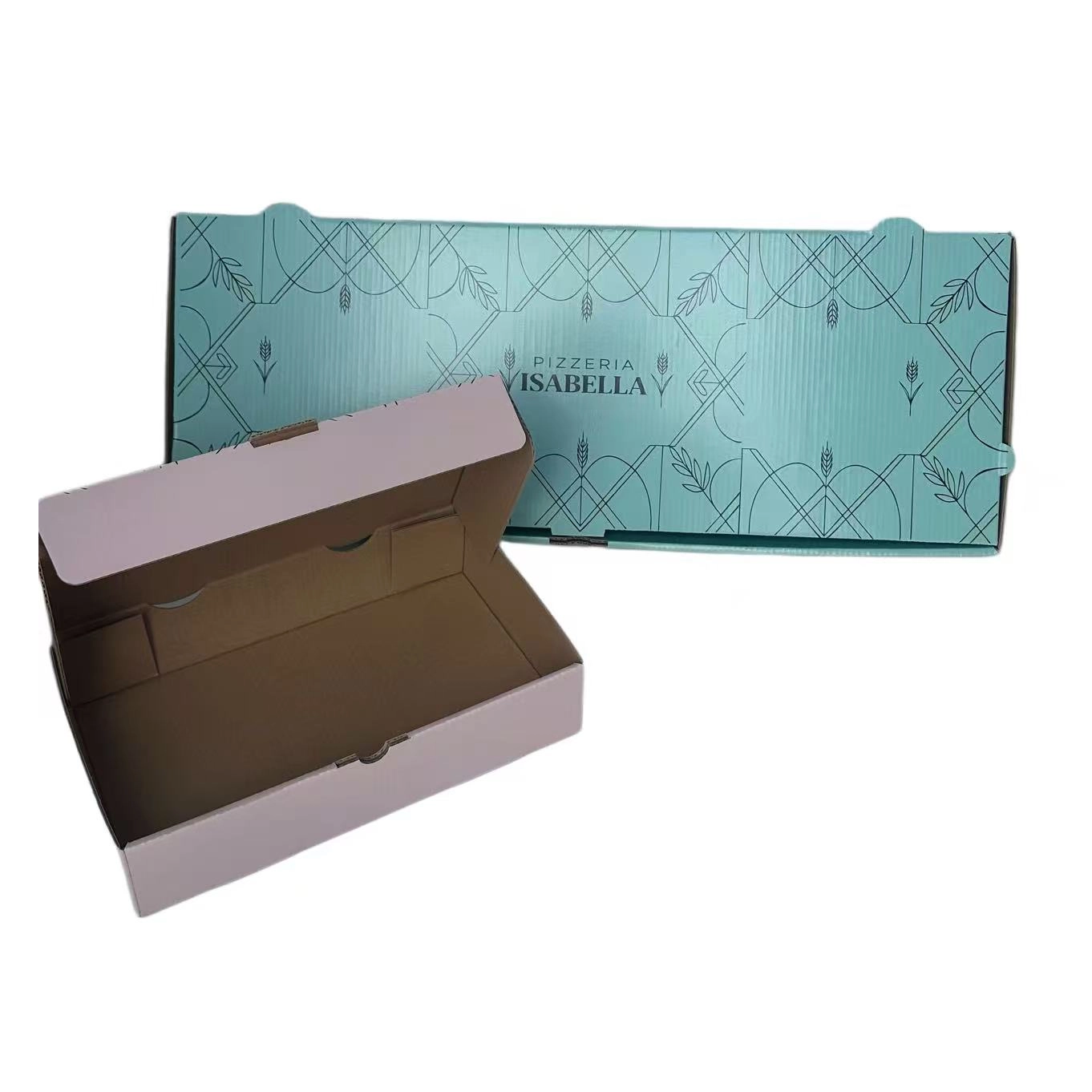
Heat and trapped steam rapidly degrade standard kraft cardboard. A coated pizza takeaway box resists the softening effects of internal moisture. This ensures the packaging remains rigid. Structural integrity is vital during multi-stop delivery runs where drivers stack multiple orders. A rigid box prevents the lid from sagging into the cheese. We have all seen crushed boxes ruin a perfect pie. The coating acts as a structural reinforcement, keeping the cardboard stiff even when the internal temperature exceeds 180 degrees Fahrenheit.
Grease resistance directly impacts customer satisfaction. Oil bleed-through damages customer countertops, car seats, and clothing. This creates an immediate negative brand association. Advanced interior coatings block grease migration entirely. They keep the exterior pristine and the customer's property clean. This mechanical barrier eliminates the need for secondary parchment or wax paper inserts. You save time on the make-line and reduce your consumable inventory.
Visual psychology plays a massive role in perceived food quality. A glossy pizza box commands attention and communicates premium ingredients. High-contrast, personalized packaging transforms a generic delivery into a branded experience. When customers receive a sturdy, vibrant package, they subconsciously elevate their expectations of the food inside. The box is the first thing they see. If it looks cheap, they assume the ingredients are cheap.
The moisture and grease barriers of varnished packaging extend far beyond pizza. Food service operators utilize these boxes for donuts, pastries, cheese boards, pies, and quesadillas. Any hot, high-grease, or delicate food item that requires pristine presentation benefits from the structural reliability and protective coatings of these specialized boxes. You can standardize your packaging across multiple menu items, simplifying your supply chain.
Here are the primary operational benefits observed when switching to coated packaging:
Elimination of bottom-box grease blowouts during extended delivery times.
Reduction in crushed lids when drivers stack four or more orders in a single thermal bag.
Faster assembly times on the cut table due to the removal of secondary grease liners.
Improved heat retention, keeping the product in the safe temperature zone longer.
Enhanced brand visibility as the glossy finish catches light and draws attention during transit.
Aqueous (AQ) coatings are water-based, fast-drying treatments. They provide a subtle sheen and excellent scuff resistance. They maintain high repulpability, making them an eco-friendly choice for exterior branding. AQ coatings strike an optimal balance between print protection and environmental responsibility. They are highly popular for high-volume operations. You get the protection you need without alienating eco-conscious consumers. The water base means it dries almost instantly on the printing press, speeding up production times.
Ultraviolet (UV) coatings are cured with UV light to deliver an ultra-high-gloss, premium finish. They offer maximum water resistance. This treatment creates a highly vibrant premium printed pizza box that stands out immediately. However, UV coatings require careful evaluation regarding local recyclability capabilities. They can also cause potential cracking along score and fold lines during assembly. If the board is too thick, the UV layer snaps when you fold the flaps. You must test the foldability before committing to a massive run.
Food-safe interior barrier coatings have replaced outdated, non-recyclable wax linings. Modern poly-coated or advanced water-based clay barriers applied to the inside of the box provide superior grease resistance. These modern alternatives maintain compliance with strict sustainability standards while ensuring direct food contact safety. You cannot use industrial chemicals near hot food. These barriers are specifically formulated to handle high heat and acidic tomato sauces without breaking down or leaching into the product.
To make an informed decision, review the comparison of common coating applications below.
Coating Type | Application Area | Finish | Primary Benefit | Recyclability |
|---|---|---|---|---|
Aqueous (AQ) | Exterior | Satin / Matte | Scuff resistance, fast drying | High (Repulpable) |
UV Coating | Exterior | High Gloss | Vibrant colors, water resistance | Moderate (Depends on facility) |
Water-Based Clay | Interior | Matte / Smooth | Grease and moisture barrier | High |
Poly-Blend | Interior | Glossy | Extreme grease resistance | Low to Moderate |
Upgrading packaging involves analyzing the upfront per-unit cost increase against operational savings. Varnished boxes with interior barriers eliminate the operational need for separate wax paper inserts, parchment sheets, or corrugated liners. Removing these secondary materials streamlines the assembly process on the make-line. It reduces inventory complexity. You stop paying for three different items and consolidate your spending into one high-performance unit. The labor saved by not folding inserts directly impacts your nightly labor percentage.
Storage environment significantly impacts packaging performance. Coated boxes perform exceptionally well in humid back-of-house kitchen storage. Uncoated kraft boxes absorb ambient moisture. They lose structural strength before they ever hold a pizza. Varnished packaging resists this ambient degradation. It ensures every box performs exactly as intended when deployed. If your dry storage is near the dish pit or the ovens, standard boxes will warp. Coated boxes hold their shape, reducing waste from damaged inventory.
Premium packaging functions as a marketing expense. A vibrant, sturdy box acts as a mobile billboard from the restaurant to the customer's home. It drives organic social media sharing, particularly through unboxing videos. The resulting brand equity and increased repeat order rates consistently offset the initial investment in higher-quality materials. When a customer carries your box down the street, everyone sees the glossy finish and sharp logo. It is direct advertising that you already paid for in your packaging budget.
Consider these operational factors when evaluating the shift to premium packaging:
Space optimization: Eliminating liners frees up valuable shelf space in cramped kitchens.
Speed of service: Fold-and-go assembly without inserts shaves seconds off every order.
Waste reduction: Moisture-resistant boxes survive humid storage, dropping inventory spoilage rates.
Customer retention: A clean, grease-free presentation encourages repeat business.
Consumers and municipalities frequently reject boxes with heavy wax or non-soluble plastic coatings. To mitigate this risk, specify repulpable, water-based varnishes. Clearly print recycling instructions on the bottom of the box. This aligns with local waste management capabilities and educates the end-user. If the recycling plant rejects your boxes, your brand takes the public relations hit. Work with your supplier to ensure the specific coatings used pass standard repulpability tests.
Consumers may mistake a shiny, high-gloss interior barrier for non-recyclable plastic or wax. This leads to skepticism about environmental claims. Use explicit, transparent on-box labeling. Print phrases like "100% Recyclable Water-Based Coating - No Wax" directly on the inside lid. This educates consumers, neutralizes greenwashing concerns, and builds brand trust. You have to tell them it is safe, or they will assume the worst. Clear communication solves most consumer pushback.
Chemical migration from exterior inks or non-compliant interior coatings poses a severe food safety risk. Require packaging vendors to provide comprehensive documentation proving all coatings meet FDA guidelines for direct or indirect food contact. Never compromise on material safety certifications. Hot grease acts as a solvent. If the interior coating is not rated for high-temperature food contact, it will leach into the pizza. Demand the spec sheets before you sign the purchase order.
Custom-printed, varnished boxes typically require higher minimum order quantities and longer lead times. Forecast inventory accurately based on historical sales data. Negotiate warehousing agreements with packaging distributors to hold safety stock. This ensures uninterrupted supply during peak demand periods. Running out of custom boxes forces you to buy generic replacements at a premium. Plan your supply chain months in advance to account for printing and curing times.
Follow these steps to mitigate supply chain risks during implementation:
Request physical samples of both AQ and UV finishes to test foldability.
Conduct a 30-minute heat and grease test using your greasiest menu item.
Verify FDA compliance documents for the specific interior barrier coating.
Establish a minimum safety stock level of four weeks with your distributor.
Design the artwork to accommodate the specific flute profile to avoid washboarding.
Audit your current packaging failure rates by tracking customer complaints regarding soggy crusts and grease leaks over a two-week period.
Request physical samples of AQ and UV coated boxes from your suppliers to evaluate foldability and finish quality in your specific kitchen environment.
Conduct a localized heat-retention and transit test by driving a coated box and a standard box around for 45 minutes to compare structural integrity.
Review your consumable inventory to calculate the exact cost savings of eliminating secondary grease liners and parchment paper.
A: Water-based AQ varnishes are generally repulpable and fully recyclable in standard municipal facilities. Heavy UV coatings or traditional wax linings may be rejected by local plants. Always check for specific recycling icons and "water-based coating" labels printed on the box to confirm local compliance. Work with your vendor to ensure the materials match your city's waste management capabilities.
A: The interior shiny layer is a food-safe barrier coating designed to prevent grease bleed-through. Modern boxes use FDA-compliant poly-blends or water-based clay alternatives to traditional wax. These coatings are strictly regulated for direct food contact. They do not contain harmful chemicals and are engineered to withstand high heat without melting into the food.
A: The gloss itself does not generate heat. However, the coating prevents the cardboard from absorbing steam and structural moisture. By maintaining the box's structural integrity and preventing the fluting from collapsing, the box seals in heat more effectively. This improves overall temperature preservation during transit and keeps the product in the safe zone longer.
A: Yes, interior coatings must meet strict FDA regulations for direct food contact. Exterior varnishes are formulated to prevent chemical migration through the corrugated substrate. Always request compliance documentation from your packaging supplier. This ensures all materials meet current safety standards and are rated for high-temperature grease exposure.
A: Upgrading to a premium printed box typically incurs a moderate percentage increase over standard kraft boxes. The exact premium depends heavily on order volume, minimum order quantities, the specific type of varnish used, and the complexity of the printed graphics. However, eliminating secondary grease liners often offsets this initial unit cost increase.
A: Yes. The moisture-resistant coating works in tandem with the box's ventilation holes. The coating prevents the cardboard from absorbing steam, forcing the excess water vapor to exit through the vents. This active moisture management keeps the crust crisp during delivery and prevents the box from collapsing under its own weight.


