
Views: 0 Author: Site Editor Publish Time: 2026-09-30 Origin: Site


In high-volume commercial kitchens, packaging speed often overrides precision. Prioritizing rapid assembly without accuracy controls leads to product delivery failures. Misaligned tabs, poorly creased edges, and asymmetrical folds compromise the structural integrity of the packaging. This results in crushed products, accelerated heat loss, increased material waste, and a degraded customer experience. Moving beyond viral speed folding metrics requires implementing strict folding accuracy controls. You must evaluate vendor die-cut tolerances and select the right corrugated materials to ensure consistent, scalable packaging operations. Precision at the prep station directly dictates the quality of the final product upon delivery. Establishing these operational standards protects your brand reputation and minimizes unnecessary overhead costs.
Die-Cut Precision Dictates Accuracy: The baseline for folding accuracy begins at procurement; inconsistent scoring on kraft pizza boxes prevents operators from achieving perfectly squared corners, regardless of their skill level.
Speed vs. Structural Integrity: Assembly speed metrics must be paired with quality assurance checks; a box folded in three seconds is an operational liability if the front locking tabs are not fully engaged.
Material Impact on Assembly: Coatings and inks alter the rigidity of corrugated board. Operators must adjust folding techniques when transitioning between standard kraft, heavily inked custom printed pizza boxes, and coated waterproof variants.
Standardized Training Reduces Waste: Implementing strict Standard Operating Procedures (SOPs) for box assembly reduces corrugated waste by minimizing torn hinges and crushed side panels during the folding process.
End-User Functionality Relies on Initial Assembly: Modern consumer expectations, including viral "leftover folding hacks," require the box to maintain its structural integrity from the kitchen to the customer's fridge.
Micro-deviations in folding angles compound rapidly during assembly. A worker might miss the designated score line by just two millimeters. This tiny error forces the adjacent side wall to sit at an 85-degree angle instead of a perfect 90-degree perpendicular stance. When the lid closes over this skewed base, the front locking tabs fail to align with their corresponding slots. Operators often force these tabs into place, creating outward tension that warps the entire container. This tension weakens the corrugated flutes, stripping the packaging of its designed load-bearing capabilities.
Corrugated packaging relies on precise geometry to achieve maximum vertical compression strength. We measure this via the Box Compression Test (BCT). Load-bearing capacity depends entirely on the side walls standing perfectly vertical. A 5-degree misalignment in side-wall folds reduces overall stacking capacity by up to 30%. The vertical flutes inside the cardboard must align directly under the weight of the boxes stacked above them.
When delivery drivers stack four or five orders in a thermal bag, the bottom container bears the combined weight. Unseated locking tabs or bulging side walls cause the bottom structure to buckle. Multi-order delivery collapses crush the food inside, forcing costly remakes and delaying subsequent deliveries. Accurate folding ensures the geometric forces distribute evenly across the reinforced corners rather than the weaker center panels.
Inaccurate folding creates unintended ventilation gaps along the rear hinges and front corners. These gaps accelerate heat loss during transit. Corrugated board acts as an insulator, trapping ambient heat radiating from the food. When a lid hovers even a quarter-inch above the base due to a forced fold, the thermal seal breaks.
Conversely, loose corner folds disrupt the engineered steam venting process. Packaging engineers design specific vent holes to release excess moisture while retaining heat. If a box is folded incorrectly, structural warping can block these intended vents or create massive unintended exhaust routes. Trapped steam quickly condensates on the inner lid and drips back down, leading to soggy crusts. Proper folding maintains the exact airflow dynamics intended by the manufacturer.
Kitchens routinely ignore the financial impact of boxes discarded during prep. Rushed folding techniques lead to torn hinges, crushed side panels, and ripped front tabs. Operators simply throw these damaged units into the recycling bin and grab a new flat-pack. Over a high-volume weekend shift, a single prep station might destroy dozens of units. You must quantify this waste to understand its impact on operational margins. Tracking discarded units reveals how poor folding habits inflate packaging expenditure and deplete inventory faster than projected.
Consumers increasingly expect packaging to offer secondary utility. The rising trend of leftover hacks involves folding the container into a compact storage unit or tearing the lid into serving plates. These secondary consumer features rely heavily on the structural memory of the corrugated board.
Poor initial kitchen assembly compromises this functionality. If an operator crushes a primary score line during the initial build, the customer cannot execute a clean secondary fold later. Weak structural memory prevents the tabs from locking into their alternative configurations. This leads to customer frustration when the viral hack they saw online fails because the kitchen staff mangled the cardboard during the initial prep phase.
The physical properties of the corrugated board dictate how it behaves during assembly. B-flute and E-flute represent the two most common profiles used in the industry. B-flute offers excellent vertical crush resistance and thermal insulation due to its thicker profile. However, this thickness creates higher fold resistance. Operators must apply more pressure to break the score lines cleanly. E-flute provides a thinner, denser profile that folds with crisp precision, offering less resistance but slightly lower insulation values.
Corrugated Flute Type | Thickness Profile | Fold Resistance | Board Memory (Spring-Back) | Ideal Operational Use Case |
|---|---|---|---|---|
B-Flute | Approx. 3.2mm | High | Moderate to High | Heavy-duty deliveries requiring maximum vertical crush resistance. |
E-Flute | Approx. 1.6mm | Low | Low | High-speed assembly lines prioritizing crisp, accurate folds. |
F-Flute | Approx. 0.8mm | Very Low | Minimal | Thin-crust or personal-sized items needing compact storage. |
Recycled content percentages also affect the crispness of a fold. High-recycled-content boards tend to have shorter paper fibers. These shorter fibers reduce the board's tensile strength, increasing the likelihood of tearing at the score line if folded too aggressively. Virgin kraft paper contains longer fibers, allowing the board to bend smoothly without rupturing the outer liner. Selecting high-quality kraft pizza boxes ensures optimal fold memory, meaning the board springs back less after the initial crease is made.
Applying heavy ink saturation and flood-coating fundamentally alters the moisture content and stiffness of the cardboard. Inks and protective varnishes add a rigid layer to the outer liner. When operators fold these heavily treated boards, the tension on the outer layer increases significantly.
This increased tension causes a phenomenon known as cracking along the fold lines. The printed surface splits, exposing the raw brown or white paper beneath. Cracking ruins the aesthetic appeal of premium packaging. To mitigate this, you must evaluate vendor scoring depths. Manufacturers producing custom printed pizza boxes must utilize deeper, wider crease profiles to accommodate the added stiffness of the ink layer. Operators must also adjust their technique, pressing firmly along the entire length of the score rather than snapping the board quickly.
Grease-resistant and waterproof coatings introduce distinct folding dynamics. Clay coats and poly-blends prevent oil and moisture from penetrating the paper fibers. However, these treatments significantly increase the surface tension and rigidity of the board.
When assembling waterproof pizza boxes, operators battle increased board memory. The cardboard actively resists the fold and attempts to spring back to its flat state. This spring-back effect can pop locking tabs out of their slots moments after assembly. Operators must apply targeted pressure and intentionally over-fold the main creases by 180 degrees before locking the tabs. This pre-breaking technique weakens the material's resistance at the exact hinge point, ensuring the tabs remain securely locked during transit.
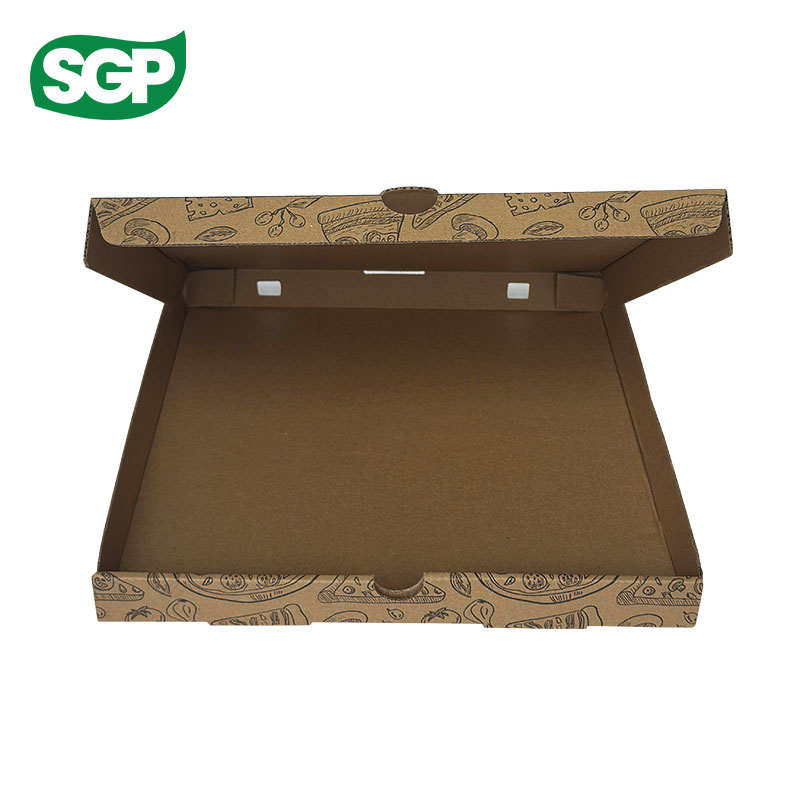
You cannot manage what you do not measure. Establishing clear visual and tactile benchmarks ensures every staff member understands the standard for a perfectly folded container. Flush corner joints serve as the primary visual indicator. The side walls must meet at exact 90-degree angles without overlapping or leaving gaps. The front-lock tabs must seat fully into their designated slots, sitting flush against the inner wall.
A perfectly horizontal lid resting state indicates proper assembly. If the lid bows upward or sits askew, the base is warped. Introduce the shake test for structural rigidity. An operator should be able to hold the assembled container by one corner and shake it moderately. If the tabs pop loose or the walls shift, the assembly failed. Tactile benchmarks involve feeling the distinct click or snap when a tab locks correctly into place.
Viral speed folding trends dominate social media, showcasing individuals folding five units in under 30 seconds. Competitive events celebrate raw speed. However, viewing these stunts through an operational lens reveals unacceptable failure rates. Rushed assembly guarantees unseated tabs, crushed flutes, and asymmetrical walls.
Operations managers must propose a balanced metric: Accurate Boxes Per Minute (ABPM). Raw speed holds no value if it compromises the locking mechanism. A sustainable operational standard focuses on achieving 5 to 7 ABPM. This pace allows the operator to execute clean folds, verify tab engagement, and stack the finished units securely. Prioritizing ABPM over raw speed eliminates the downstream bottlenecks caused by structural failures during the dinner rush.
Assembly Speed Target | Average Time Per Unit | Estimated Structural Failure Rate | Operational Verdict |
|---|---|---|---|
Hyper-Speed (Viral) | 3 - 5 Seconds | 40% - 60% | Unacceptable. High risk of delivery collapse and material waste. |
Standard Operational (ABPM) | 8 - 12 Seconds | 2% - 5% | Optimal. Balances labor efficiency with structural integrity. |
Slow/Training Pace | 15+ Seconds | < 1% | Inefficient for peak hours but necessary for onboarding new staff. |
Accurate folding requires a dedicated, ergonomically optimized physical workspace. The table height must align with the operator's waist to allow for downward pressure without straining the shoulders. Stacks of flat-packs should sit directly in front of the operator, eliminating the need for twisting or overreaching.
To set up an optimal folding station, follow these ergonomic guidelines:
Adjust the prep table height to exactly belt-level for the primary operator to maximize downward leverage.
Position the raw flat-pack inventory no more than 20 inches from the operator's center line to prevent lower back strain.
Designate a clear, unobstructed slide-path to the right or left for stacking finished units.
Install anti-fatigue mats to reduce lower body stress during extended prep shifts.
The biomechanics of folding play a major role in preventing repetitive strain injuries. Operators should use the flat palms of their hands to press along crease lines rather than relying solely on their thumbs. Distributing the pressure prevents localized fatigue and ensures a sharper, more consistent crease. Proper stack positioning allows the operator to slide the finished unit seamlessly onto the adjacent staging area, maintaining a fluid, rhythmic motion that supports both accuracy and sustainable speed.
Eliminating individual operator variations requires a step-by-step, standardized folding sequence. Strict SOPs prevent staff from developing rogue techniques that compromise structural integrity. The sequence must begin with pre-breaking the main horizontal scores. Operators lay the flat-pack face down and fold the front and rear walls inward to establish the primary hinges.
Follow this exact 5-step sequence to guarantee uniformity across all shifts:
Lay the flat-pack face down on a clean, dry surface.
Fold the front and rear walls inward by 90 degrees to establish the primary hinges.
Lock the side walls by folding the inner flaps over the corner supports, ensuring the tabs click into the base slots.
Fold the lid over and seat the front lip securely into the front locking mechanism.
Perform a quick visual check for flush corners and a horizontal lid.
Enterprise-level franchise standards emphasize patience and precision over chaotic speed. Training new staff involves tactile feedback. Instructors must teach trainees to feel the click of a locked tab and recognize the resistance of a properly squared corner. Every pizza box must follow this exact sequence to guarantee uniformity.
Kitchen staff naturally lean toward competition. Internal store challenges can boost morale, but they often encourage reckless speed. You can harness this competitive nature by gamifying assembly safely. Host internal folding competitions that heavily penalize structural errors.
Set a timer for two minutes and challenge staff to fold as many units as possible. However, deduct three points for every unseated tab, torn hinge, or warped side wall. This framework forces staff to learn how to fold quickly while maintaining absolute precision. It shifts the cultural focus from raw speed to flawless execution, reinforcing the importance of accuracy in a high-pressure environment.
Identifying the root causes of common errors allows managers to implement immediate corrective actions. Visual aids and quick-reference guides at the prep station help operators self-correct before wasting materials.
Error Type | Visual Symptom | Root Cause | Corrective Action |
|---|---|---|---|
The Bulging Side Wall | Side panels bow outward, preventing the lid from closing flush. | Operator failed to pre-break the score line before locking the corner tabs. | Apply firm downward pressure along the entire length of the side crease before folding inward. |
The Torn Hinge | Ripped cardboard at the rear corners, exposing inner flutes. | Forcing the fold against the board's natural resistance or pulling upward too sharply. | Use flat palms to guide the fold naturally along the manufacturer's perforated line. |
The Hovering Lid | Front lid rests above the locking slots, leaving a visible gap. | Front tabs are misaligned due to asymmetrical side-wall assembly. | Unfold the front section, square the side walls to exactly 90 degrees, and re-seat the tabs. |
The Popped Tab | Corner locks spring open immediately after assembly. | High board memory (spring-back) overcoming the friction lock. | Over-fold the corner flaps by 180 degrees to break the material tension before locking. |
Quality assurance requires continuous monitoring. Shift managers must establish a framework to audit pre-folded stacks before the peak rush begins. A quick visual inspection of a stack of 50 units reveals inconsistencies. If the stack leans to one side or wobbles, the individual units feature asymmetrical folds.
You should implement a daily spot-check routine. Walk down the prep line and randomly pull three assembled units from the middle of a stack. Inspect the locking tabs. If you find a single unseated tab, the entire stack must be broken down and re-folded. This strict enforcement prevents structural failures from reaching the delivery drivers.
Implement a feedback loop to track the ratio of discarded boxes to total orders. Place a dedicated recycling bin at the folding station specifically for damaged flat-packs. Count the discarded units at the end of the shift. If the waste exceeds 1% of total volume, initiate retraining for the staff members on that shift. This data-driven approach highlights inefficiencies and holds operators accountable for material waste.
Folding accuracy relies heavily on the packaging supplier's tooling maintenance. Dull die-cutters create shallow, inconsistent scores. When the scoring rule fails to compress the corrugated flutes adequately, the board resists folding. The operator is forced to guess where the fold should occur, leading to crooked lines and compromised geometry.
You must evaluate a supplier's manufacturing tolerances. Flatbed die-cutting generally offers tighter tolerances than rotary die-cutting, ensuring cleaner cuts and deeper scores. Provide your procurement team with a checklist for inspecting sample batches.
Use this procurement inspection checklist when evaluating new vendor samples:
Measure score depth consistency across the entire width of the flat-pack using a caliper.
Inspect all cut-outs and locking slots for clean edges, rejecting any batches with hanging paper fragments (chads).
Perform a 180-degree fold test on the primary hinges to check for outer liner cracking.
Assemble five units and conduct a vertical compression test to verify load-bearing capacity.
Verify that the flute direction runs parallel to the primary load-bearing walls.
High-volume operations must weigh the labor costs of in-house flat-pack assembly against alternative solutions. Manual folding requires dedicated labor hours, physical space, and continuous quality control. Flat-packs offer the lowest unit cost and require minimal storage space.
Pre-folded solutions eliminate assembly errors and labor costs but command a significantly higher premium and demand massive storage footprints. For enterprise-level franchise operations, assess the viability of semi-automated box folding machines. These machines guarantee perfect geometric accuracy and operate at high speeds. While the initial capital expenditure is high, the reduction in labor costs, elimination of material waste, and guarantee of structural integrity often yield a positive return on investment within high-output commissaries.
Folding accuracy is not a secondary task to be rushed through during prep; it is a critical quality control checkpoint. The precision of the initial fold directly impacts product integrity, thermal retention, and ultimate customer satisfaction. Structural failures caused by sloppy assembly lead to crushed food, cold deliveries, and wasted materials.
Procurement teams must prioritize vendors who demonstrate tight die-cut tolerances and consistent scoring depths over those simply offering the lowest unit price. A cheap flat-pack that refuses to fold accurately costs more in labor and waste than a premium unit engineered for seamless assembly.
Conduct a comprehensive folding audit on your current inventory to identify recurring structural failures and weak locking tabs.
Revise your assembly SOPs to prioritize Accurate Boxes Per Minute (ABPM) over raw speed metrics, ensuring staff focus on precision.
Request sample runs of different flute profiles from your supplier to test for optimal foldability and board memory under real kitchen conditions.
Implement a dedicated waste-tracking bin at the prep station to quantify the financial impact of torn and discarded units per shift.
A: Accurate folding ensures that load-bearing walls are perfectly vertical and locking tabs are fully engaged. This maximizes the vertical compression strength of the corrugated board and prevents stacking collapses during multi-order deliveries.
A: Uncoated kraft boxes generally offer less resistance along score lines. Custom printed variants with heavy ink coverage or gloss finishes are stiffer. They require deeper manufacturer scoring to fold accurately without cracking the outer liner.
A: While competitive events show sub-5-second times, a sustainable operational standard that guarantees structural accuracy and fully locked tabs is typically between 8 to 12 seconds per unit. This translates to 5 to 7 Accurate Boxes Per Minute.
A: Waterproof and grease-resistant coatings increase board memory, causing spring-back. To prevent popping, operators must pre-break or over-fold the main crease lines by 180 degrees before final assembly to weaken the material's resistance.
A: Tearing is usually caused by operator error, such as forcing the fold before bending the score line. It can also result from poor vendor manufacturing where dull die-cutting blades fail to perforate the cardboard sufficiently.
A: Yes. Asymmetrical folds create unintended gaps between the lid and the base. This allows trapped heat to escape rapidly and disrupts the designed thermal regulation, leading to cold food and soggy crusts.
A: Folding a standard container into a smaller leftover box is only possible if the manufacturer included specific secondary perforations. Attempting to force a standard unit into a smaller shape without these scores results in torn cardboard.


