
Views: 0 Author: Site Editor Publish Time: 2026-07-25 Origin: Site


Rising food costs, third-party delivery fees, and mounting overhead continuously squeeze independent pizzeria profit margins. Operators face compounding pressure to optimize every operational expense without degrading the customer experience. Packaging remains a significant line item, forcing owners to evaluate the true return on investment of every box leaving the kitchen.
A central tension exists between building brand recognition through custom packaging and the reality of high Minimum Order Quantities (MOQs). High per-unit costs for printed boxes erode takeout profitability, tying up operating capital in cardboard inventory. While vibrant logos look appealing, the financial mechanics of custom printing often work against the lean operational models required in modern food service.
A strategic shift toward minimalist packaging offers a practical solution. Adopting a Plain White Pizza Box framework allows operators to reclaim margins, streamline inventory, and maintain structural quality without sacrificing customer experience.
Margin Protection: Eliminating custom printing reduces per-unit packaging costs and eliminates expensive plate fees and high MOQs.
Operational Agility: A standardized blank pizza box simplifies inventory management and prevents obsolete packaging when menus or promotional campaigns change.
Sustainable Compliance: Unprinted packaging inherently avoids toxic ink contamination, making the eco white pizza box a safer, more recyclable option.
Hybrid Branding: Operators can achieve brand recognition on unprinted boxes through low-cost, agile methods like custom stamps, branded tape, or promotional box toppers.
Evaluating packaging success requires looking beyond aesthetics. The baseline metrics for packaging efficiency include cost per order, cash flow impact, and storage efficiency. Every fraction of a cent saved on packaging directly improves the bottom line, making the transition to unprinted boxes a highly effective margin-protection strategy for high-volume kitchens.
The direct per-unit cost of printed boxes is inherently higher than unprinted alternatives. Custom printing introduces hidden costs that operators often overlook during initial procurement. Setup fees, color plate charges, and design revisions add significant upfront expenses before a single box is manufactured. When you factor in the waste of outdated promotional boxes, the true cost of custom printing skyrockets.
Wholesale volume cost curves heavily favor plain white pizza packaging. Bulk orders of unprinted boxes deliver immediate economies of scale. Operators bypass the upfront capital required for multi-color print runs, securing lower per-unit rates regardless of design changes. Calculating the projected annual savings based on average weekly takeout volume often reveals that switching to a blank pizza box frees up capital for equipment upgrades or labor retention.
Packaging Type | Setup Fees | Minimum Order Quantity (MOQ) | Inventory Risk | Lead Time |
|---|---|---|---|---|
Custom Printed Box | High (Plate & Design Fees) | High (Often Pallet Minimums) | High (Menu/Logo Changes) | Long (4-8 Weeks) |
Plain White Box | None | Low (Bundle/Case Options) | Zero (Universal Use) | Short (Stocked Locally) |
Custom box suppliers enforce high MOQs to offset their print setup costs and machine downtime. This forces pizzerias to purchase thousands of boxes at once. The opportunity cost of tying up operating capital in months of packaging inventory restricts financial flexibility. Cash that could be used for marketing or emergency repairs sits idle in a storage room taking up valuable square footage.
Sourcing plain white boxes allows for just-in-time ordering. Distributors maintain massive inventories of standard unprinted boxes, enabling pizzerias to order smaller quantities more frequently. This approach improves cash flow liquidity and drastically reduces the financial risk associated with holding excess inventory.
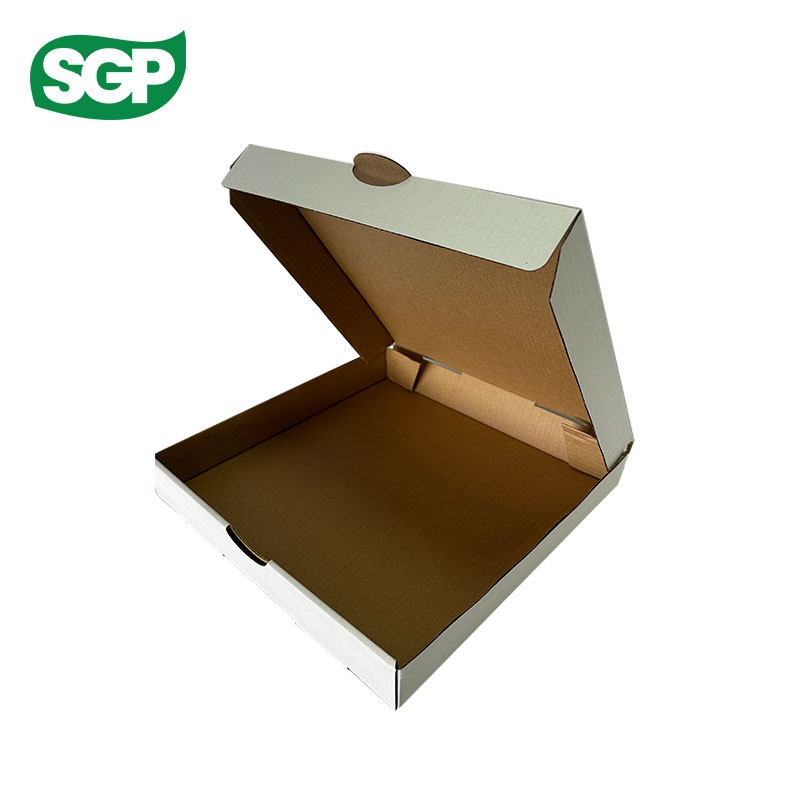
Standardizing packaging impacts back-of-house operations just as much as the balance sheet. A simplified packaging strategy accelerates assembly, reduces errors during the Friday night rush, and optimizes limited storage space in crowded restaurant kitchens.
Tracking stock levels for multiple printed box sizes creates a logistical burden. If a pizzeria runs out of custom 14-inch boxes, using a branded 16-inch box for a smaller pizza looks unprofessional and wastes expensive packaging. Maintaining a plain white pizza box inventory reduces the risk of stockouts. It simplifies supplier reordering, as managers only need to track standard blank inventory without worrying about matching specific promotional prints.
Restaurants frequently pivot. A pizzeria might rebrand, update its logo, or discontinue a promoted menu item. When these changes occur, custom-printed boxes featuring outdated information become dead stock. Throwing away unused boxes is a direct loss of capital. The blank box serves as a future-proof asset. It remains completely usable regardless of marketing pivots, ensuring zero packaging waste during brand transitions.
The rise of virtual brands, ghost kitchens, and co-packers demands extreme operational efficiency. Operating multiple menu concepts from a single kitchen requires streamlined logistics. An unprinted pizza takeaway box acts as a universal vessel. Kitchen staff can serve distinct virtual brands using the exact same inventory footprint, drastically reducing operational complexity and preventing the need to store five different custom box designs in a single facility.
Cost-cutting must never compromise the integrity of the food during transit. A soggy or crushed pizza guarantees a lost customer. Unprinted boxes must meet the exact same structural and thermal standards as their printed counterparts.
Corrugated cardboard flute types dictate how well a box insulates the pizza. B-flute offers excellent crush resistance and insulation, while E-flute provides a thinner profile with adequate heat retention for shorter delivery radiuses. Proper ventilation holes and steam release vents are non-negotiable in plain white pizza packaging. These vents prevent soggy crusts by allowing excess moisture to escape without letting critical heat dissipate during transit.
High-volume delivery runs require boxes with exceptional crush resistance, secure locking tabs, and reliable stacking strength. The structural rigidity of bleached white kraft paper often matches or exceeds standard brown kraft, providing a clean look with robust performance. High-quality blank pizza box models utilize a double-wall side design. This engineering ensures safe stacking during multi-order dispatches, preventing the bottom box from collapsing under the weight of the pizzas above it.
Environmental impact and regulatory compliance play a major role in packaging selection. Consumers and municipalities increasingly demand sustainable takeout solutions. Unprinted packaging inherently aligns with these eco-friendly initiatives.
Heavily inked boxes complicate the recycling process. An unprinted pizza takeaway box offers distinct recycling advantages because it lacks the heavy chemical dyes that recyclers must separate from the paper pulp. Furthermore, municipal composting guidelines are often more accepting of grease-stained, unprinted corrugated cardboard, allowing the entire box to break down naturally without introducing synthetic pigments into the compost stream.
Eliminating petroleum-based or heavy-metal inks provides immediate food safety benefits. Hot food generates steam, which can interact with the ink on the inside or outside of a box. A true eco white pizza box utilizes elemental chlorine-free bleaching processes and FDA-compliant food-grade materials. This ensures that no harmful chemical contaminants transfer to the pizza, protecting both the consumer and the restaurant's liability.
The primary objection to plain boxes is the perceived loss of brand visibility. However, operators can implement cost-effective workarounds that maintain brand presence without the financial burden of custom printing.
Consumer preferences are shifting. There is a growing nostalgia for minimalist, no-logo packaging. This aesthetic emphasizes product purity, artisanal quality, and clean presentation over heavy corporate branding. A pristine white box signals a focus on the food inside, allowing the quality of the pizza to speak for itself.
Operators can achieve excellent brand visibility using agile methods. A custom rubber stamp with food-safe ink provides a rustic, artisanal look at a fraction of the cost of pre-printed boxes. Branded tamper-evident tape secures the box for third-party delivery while adding clear logo visibility. These methods offer high return on investment, allowing the restaurant to brand boxes on demand.
Attaching a low-cost, full-color flyer or menu to a blank pizza box drives repeat business effectively. A box topper can feature QR codes, loyalty program details, or seasonal specials. This method offers extreme flexibility, allowing managers to change box toppers weekly for specific promotions, something impossible to do with a pallet of pre-printed boxes.
Selecting the right vendor ensures consistent quality and reliable supply. The procurement process requires careful evaluation of board grade, shipping logistics, and overall material safety.
When interviewing packaging distributors, operators must ask critical questions. Verify the board grade, the origin of the materials, and strict FDA compliance for food contact. Always request physical samples to test with actual product. Place a hot pizza in the sample box, wait twenty minutes, and evaluate the crust quality and box integrity before committing to a pallet.
Shipping costs heavily impact the final per-unit price of bulky items like pizza boxes. Analyze the freight charges carefully. Local distributor pickup often eliminates shipping fees entirely, though it requires staff time and a suitable vehicle. Direct-from-manufacturer freight delivery works well for high-volume operations with loading docks, but operators must calculate the exact landed cost per box to ensure the wholesale discount isn't negated by shipping expenses.
The plain white pizza box is a strategic financial lever for modern pizzerias prioritizing food quality and margin protection. By eliminating print costs, restaurants improve cash flow, streamline back-of-house operations, and maintain complete flexibility over their marketing efforts. Choose plain white packaging if cash flow is tight, storage space is limited, or the brand relies heavily on third-party delivery apps where extensive box branding yields a lower return on investment.
Audit your current packaging spend across all box sizes to identify custom printing premiums.
Calculate your average monthly box volume to determine your true inventory holding costs.
Request blank box samples from wholesale restaurant suppliers to conduct real-world heat and moisture tests.
Test agile branding methods like custom stamps or branded tape on a small batch of unprinted boxes.
A: The cost difference is typically minimal. While bleaching processes add a slight manufacturing step, plain white boxes are produced in such massive global volumes that economies of scale often make them price-competitive with, or sometimes cheaper than, standard unprinted kraft brown boxes.
A: Heavily grease-soaked sections cannot be recycled because the oil interferes with the paper pulping process. However, the clean top lid of a plain white box can usually be torn off and recycled. Unprinted, grease-stained bottoms are often accepted in municipal commercial composting programs.
A: Custom rubber stamps using food-safe ink offer the lowest cost per impression. Alternatively, branded tamper-evident tape provides both security for third-party deliveries and clear logo visibility without the high minimum order quantities required for custom-printed cardboard.
A: Yes. Heat retention relies entirely on the corrugated cardboard flute type and the ventilation design, not the ink. An unprinted box with the correct structural engineering will perform identically to a printed box of the same material grade.
A: Standard wholesale dimensions typically range from 8 inches for personal pizzas up to 18 inches for extra-large pies. The most commonly stocked sizes across distributors are 10-inch, 12-inch, 14-inch, and 16-inch boxes, available in both standard and deep-dish depths.
A: High-quality eco white boxes use Elemental Chlorine-Free or Totally Chlorine-Free bleaching processes. These methods are FDA-compliant for food contact and prevent harmful dioxins from entering the environment or transferring to the food.


