
Views: 0 Author: Site Editor Publish Time: 2026-07-11 Origin: Site


In a saturated takeout market, the physical box is the only guaranteed touchpoint a customer interacts with post-purchase. Yet, many operators treat it as a disposable commodity. Standard 1-color or unprinted kraft boxes fail to capture post-delivery brand equity. This leaves operators reliant on costly third-party delivery apps for customer retention and re-acquisition. Upgrading to a premium Full-Color Pizza Box transforms utilitarian packaging into owned media. This guide evaluates the technical specifications, cost-benefit analysis, and implementation realities of transitioning to high-fidelity printed corrugated packaging. We will cover print technologies, structural integrity, and supply chain management to help you execute a successful packaging upgrade. You will learn how to navigate prepress requirements, select the right corrugated flutes, and manage inventory effectively.
Marketing ROI: A fully branded pizza box acts as an in-home billboard, directly influencing repeat order rates, organic social sharing, and offline word-of-mouth.
Technical Feasibility: Transitioning requires understanding the core differences between direct digital printing, litho-lamination, and standard flexography on corrugated board.
Cost vs. Scale: While unit costs are higher, strategic bulk ordering, optimized Minimum Order Quantities (MOQs), and smart design layouts can offset the premium of full color pizza packaging.
Compliance & Quality: Upgrading mandates strict adherence to food-safe ink standards, structural testing to ensure heavy ink coverage does not compromise heat retention, and proper ventilation to prevent soggy crusts.
Defining successful packaging means looking beyond basic transport. A well-designed box must maintain structural integrity, drive brand recall, and offset customer acquisition costs. When you shift your mindset from viewing packaging as a mere operational expense to treating it as a high-yielding marketing investment, the true value emerges. A high-quality branded pizza box acts as a physical advertisement in the customer's home. We measure success by tracking repeat order volume, social media mentions, and the reduction in third-party app commissions. If a customer orders directly from your website because they saw the URL on your box, the packaging has paid for itself.
Operators often struggle with the initial sticker shock of custom printing. However, you must evaluate the cost against your current marketing spend. If you spend thousands on digital ads with low conversion rates, reallocating a portion of that budget to packaging often yields a higher return. The box sits on the kitchen counter for hours. It gets shared at parties. It is visible to roommates and family members. This extended exposure is something digital ads simply cannot replicate.
Tracking the impact of packaging involves analyzing direct-to-consumer ordering versus reliance on third-party apps. By promoting your own ordering platform directly on the box, you encourage customers to bypass expensive delivery services for their next meal. Color psychology also plays a major role in how customers perceive your food. Specific full-color tones influence appetite, perceived freshness, and the premium pricing thresholds of the food inside. Warm colors like red and orange stimulate hunger. Sleek black or minimalist designs convey a premium, artisanal quality that justifies higher menu prices.
To accurately measure retention, implement tracking mechanisms directly on the packaging. Use unique promo codes printed on the side panels. Add QR codes that link to a hidden landing page for direct ordering. Monitor the usage rates of these specific codes to calculate the exact return on your packaging investment. This data allows you to tweak designs and offers in subsequent print runs, continuously optimizing your physical marketing assets.
The exterior visuals of your packaging must command attention during transit and stand out on social media feeds. A striking visual identity turns every delivery into a mobile advertisement. Furthermore, leveraging the interior lid real estate offers a unique opportunity for storytelling. You can include QR-coded menu highlights, social media prompts, coupons, or custom loyalty programs directly on the inside cover. Integrating interactive design elements prolongs brand exposure and creates a memorable unboxing experience.
Print a large, scannable QR code on the inside lid linking to your loyalty program.
Include a visually appealing reheating guide to ensure the product tastes great the next day.
Add puzzle designs or cutout shapes for family-friendly engagement.
Feature high-quality images of your most profitable side dishes to drive cross-selling on future orders.
Understanding the difference between the 4-color process and spot-color limitations is essential for packaging design. A CMYK pizza box allows for complex layouts, custom photography, and detailed vector art. Standard 1-to-2-color flexography simply cannot reproduce these elements. However, evaluating resolution, gradient capabilities, and photographic reproduction limits on porous fiber surfaces is necessary. Corrugated board absorbs ink differently than glossy paper, which can lead to dot gain and muddy images if not properly managed in prepress.
Flexography uses flexible photopolymer plates to stamp ink onto the board. It is fast and cheap for simple logos but terrible for gradients. CMYK printing mixes Cyan, Magenta, Yellow, and Black to create thousands of colors. When designing for CMYK on corrugated material, you must adjust your ink limits. Too much ink saturation will warp the board and increase drying times, leading to smudging on the factory floor.
Direct digital printing offers lower setup costs and requires no expensive printing plates. This method is ideal for short runs, localized test marketing, or seasonal campaigns. You can print a different design for a local sports team's playoff run without committing to a massive inventory. On the downside, production speeds are slower for massive enterprise volumes. Variable unit-cost pricing can make it less economical for large-scale operations that require tens of thousands of boxes per week.
Digital presses use inkjet technology to spray CMYK ink directly onto the board. The registration is perfect, meaning colors will not shift out of alignment. This is a massive advantage over older flexo machines. However, the ink itself is often more expensive. You must weigh the savings on tooling (plates and dies) against the higher per-unit ink costs when deciding if digital is right for your operation.
Litho-lamination involves printing on high-grade paperboard before laminating it to the corrugated flute. This achieves retail-grade visual fidelity. This process is the go-to choice for high-volume orders where precise color matching and high-resolution imagery are required. Choosing between litho-lamination and digital printing depends on your volume, turn times, and surface finish requirements.
Printing Method | Setup Costs | Unit Cost at High Volume | Print Quality | Best Use Case |
|---|---|---|---|---|
Flexography (1-2 Colors) | Medium (Plates required) | Very Low | Basic, no gradients | Standard volume, simple logos |
Digital Printing | Zero (No plates) | Medium to High | Excellent, full color | Short runs, seasonal promos |
Litho-Lamination | High (Plates + Lamination) | Low | Photographic, retail grade | Enterprise volume, complex art |
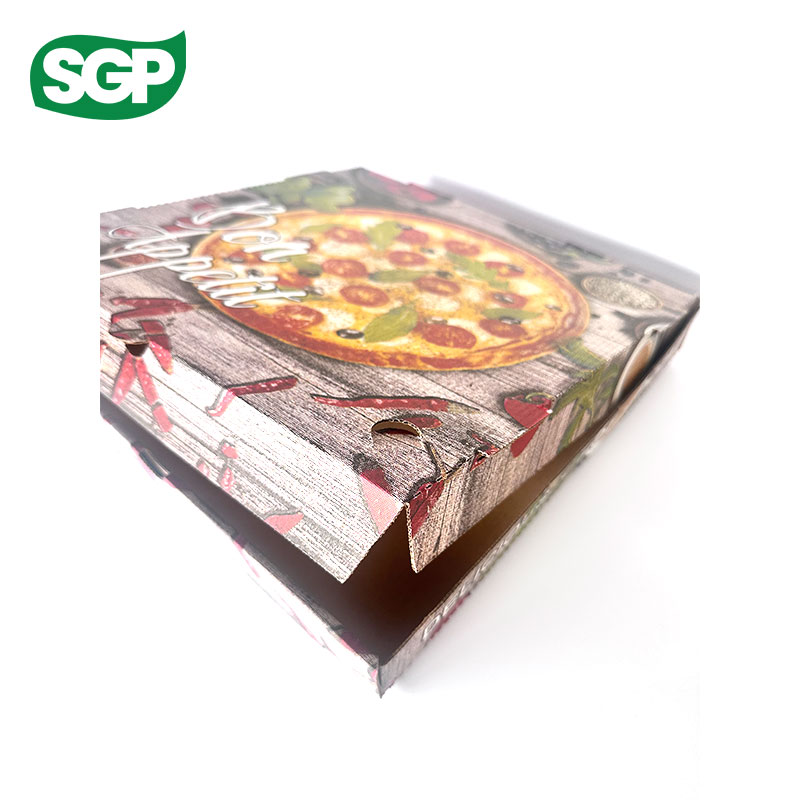
Choosing the right substrate impacts the final print quality heavily. Coated white board is essential for vibrant CMYK reproduction. It provides a smooth surface that holds ink well and prevents it from soaking too deeply into the fibers. Conversely, uncoated kraft board impacts color accuracy, absorption, and saturation. Printing full color on brown kraft often results in a muted, rustic appearance. Yellows and lighter tones will disappear entirely against the brown background unless you lay down a layer of opaque white ink first.
When selecting your board, you must also consider the virgin versus recycled fiber content. Recycled boards are great for sustainability messaging but often have shorter fibers, making them slightly weaker and more prone to dusting during the print process. Virgin kraft offers superior tear resistance and a smoother printing surface, but comes at a higher environmental and financial cost.
Evaluating standard square boxes versus octagonal designs is important for structural rigidity, heat retention, and printable corner space. Octagonal boxes use less material and often feature better crush resistance, but they reduce the available canvas for your artwork. Common size considerations range from 8-inch personal to 18-inch extra-large. The corrugated flute thickness dictates printing tolerances on a printed corrugated pizza box.
E-Flute: Very thin, excellent for high-quality printing, but offers less insulation.
B-Flute: Thicker, provides great crush resistance and heat retention, but the fluting lines may show through the print (fluting shadow).
F-Flute: Ultra-thin, used for premium retail packaging, rarely used for heavy takeout items.
Navigating regulations regarding direct and indirect food contact is non-negotiable. Evaluating water-based versus UV-cured inks ensures that the packaging meets safety standards without compromising print quality. Food-grade water-based inks are typically preferred for packaging that comes into close proximity with consumable items. UV inks offer incredible gloss and durability, but they contain photoinitiators that can migrate into food if not properly cured and separated by a functional barrier.
Always request compliance documentation from your supplier. You need a Letter of Guaranty stating that the inks and adhesives used in the manufacturing process meet FDA guidelines for indirect food contact. If you plan to print on the inside of the lid, the regulations become even stricter, often requiring specialized barrier coatings to prevent grease from interacting with the pigments.
Heavy ink coverage and protective coatings can affect the board's breathability. Ensuring ventilation holes are optimized is critical so the visual upgrade does not result in trapped steam and a soggy product. The structural integrity must support the weight of the food while maintaining adequate thermal dynamics. If you coat the entire box in a heavy gloss varnish, you seal the pores of the paper. The steam from the hot food has nowhere to go, ruining the crust.
To combat this, work with your structural designer to place ventilation holes strategically. They should be located on the side or back panels, away from the primary branding on the top lid. You can also use a spot varnish instead of a flood coating, leaving certain areas of the board uncoated to allow moisture to escape naturally.
The recyclability and compostability of heavily printed boxes are growing concerns for consumers. Communicating eco-friendly choices through on-box messaging helps build brand trust. Using water-based inks and recyclable materials ensures that your packaging aligns with environmental sustainability goals. Avoid heavy plastic laminations if you want the box to remain curbside recyclable.
Many municipalities will not recycle boxes heavily stained with grease. You can educate your customers by printing disposal instructions directly on the bottom of the box. Tell them to tear off the clean top lid for recycling and compost the greasy bottom half. This small educational touch shows that your brand cares about the lifecycle of its packaging.
Breaking down the price delta between unprinted, 1-color flexo, and full-color boxes reveals the initial investment required. While the unit cost is higher, the marketing value often justifies the expense. A standard kraft box might cost $0.30, while a fully printed litho-lamination box might cost $0.65. That $0.35 difference is your marketing acquisition cost. If that box brings a customer back directly to your website instead of a delivery app, you save $5.00 to $8.00 in commission fees on the next order.
Calculating the hidden costs of warehousing large volumes of custom boxes is also a necessary step in financial planning. Custom boxes require you to hold inventory. If you order 50,000 boxes to get a lower unit price, you must pay for the warehouse space to store them. Corrugated board is bulky. It also absorbs moisture from the air, meaning you cannot store it in a damp, unclimate-controlled garage without risking warping and delamination.
Supplier MOQs dictate the financial viability of custom full color pizza packaging. High MOQs lower the unit cost but require significant storage space and upfront capital. Balancing these factors is crucial for maintaining healthy cash flow and operational efficiency. Digital printing allows for MOQs as low as 500 units, making it accessible for single-location operators. Litho-lamination usually requires a minimum of 10,000 to 25,000 units to absorb the setup costs.
Work with suppliers who offer inventory management programs. Some manufacturers will print a large run to get you the volume discount, store the pallets in their facility, and drip-feed the inventory to your locations on a monthly basis. This "make and hold" strategy frees up your back-of-house space while locking in favorable pricing.
A framework for determining how many repeat orders or new customer acquisitions are required to justify the packaging premium helps in making informed decisions. Accounting for one-time costs like cutting dies, printing plates, and prepress proofing in the initial ROI calculation provides a clear picture of the total investment. Cutting dies can cost anywhere from $500 to $2,000 depending on the complexity of the box shape. Printing plates for flexography are charged per color.
To calculate your break-even, divide your total packaging upgrade cost by your average customer lifetime value (LTV). If the new packaging costs an extra $2,000 per month, and your average customer LTV is $100, you only need the packaging to generate 20 new or repeat customers a month to break even. Given the visibility of the box, this is a highly achievable metric.
Navigating the custom dieline process involves working with vector files, bleed zones, glue margins, and safe text areas. Adjusting brand assets specifically for corrugated board absorption avoids muddy print results. Proper prepress workflow ensures that the final product matches the intended design. Never submit flat JPEG images for packaging. You must provide layered Adobe Illustrator files with all fonts outlined and images embedded at 300 DPI.
Pay close attention to the bleed. Corrugated die-cutting machines have a tolerance of about 1/8 to 1/4 of an inch. If your artwork stops exactly at the cut line, any slight shift in the machine will result in an ugly white border. Extend your background colors and images past the cut lines to ensure edge-to-edge coverage. Keep all critical text and logos well within the safe zone to prevent them from being sliced off or folded over a crease.
Extended lead times for custom printed materials compared to off-the-shelf stock boxes present a significant risk. Establishing safety stock levels, utilizing localized backup suppliers, and staggered delivery schedules mitigate these disruptions and ensure a steady supply of packaging. Custom boxes typically have a lead time of 4 to 8 weeks. If you run out, you cannot simply run to a local restaurant supply store to buy more of your branded boxes.
Set a strict reorder point. When your inventory drops to a 4-week supply, trigger an automatic reorder. It is also wise to keep a small emergency stash of generic unprinted boxes on hand. While not ideal for branding, they will keep your operation running if a supply chain shock delays your custom shipment.
Addressing registration errors, bleed requirements, and color shifting on porous corrugated materials prevents costly mistakes. Complex, dark designs may show scuffing during transit. Applying protective food-safe coatings prevents ink rub and maintains the visual integrity of the box. When boxes are stacked on pallets and shipped across the country, the friction between them can rub the ink off the top lids.
To prevent this, specify an aqueous coating or a UV varnish on your print specs. This clear layer locks the ink in place and provides a slight sheen that makes the colors pop. Also, avoid using large areas of solid, dark colors if you are printing on uncoated kraft board. The board will absorb the ink unevenly, resulting in a mottled, patchy appearance.
Creating an inspection checklist for incoming inventory is essential. Checking for ink odor, structural crush tests, and color matching against brand-specified delta-E tolerances ensures that every batch meets your quality standards. When a new pallet arrives, do not just sign the bill of lading and put it in storage. Open a bundle immediately.
Smell the boxes. If there is a strong chemical odor, the ink was not cured properly, and it will taint the flavor of the food. Fold a box and check the scores. If the board cracks along the fold lines, the material is too dry or the scoring wheels were set incorrectly. Finally, compare the printed colors to your approved physical proof. Do not rely on your computer monitor for color matching, as screens emit light while paper absorbs it.
A full-color pizza box is a high-leverage investment for operators focused on brand differentiation, customer retention, and first-party order growth. The transition requires careful planning regarding print methods, material selection, and supply chain logistics. By treating your packaging as a marketing channel rather than a disposable commodity, you capture post-delivery brand equity and reduce reliance on third-party platforms.
Audit your current packaging spend, warehouse storage capacity, and monthly volume requirements.
Request structural dielines and printed material samples from at least three shortlisted suppliers.
Commission a packaging-specific graphic designer to build CMYK-compliant artwork with proper bleeds and safe zones.
Order a small digital prototype run to test structural integrity and thermal dynamics before committing to a massive litho-lamination order.
A: Yes, provided they adhere to FDA guidelines. Safe packaging requires food-grade water-based inks and often utilizes grease-resistant barrier liners to prevent contamination and maintain food safety.
A: A CMYK box uses a 4-color blending process (Cyan, Magenta, Yellow, Black) to create complex, photographic imagery. A spot-color box uses pre-mixed single colors, which is better suited for simple logos and flat designs.
A: Yes, most can be recycled. The use of water-based inks and specific eco-friendly barrier coatings allows the corrugated board to remain recyclable under many local municipal guidelines, though heavy grease contamination can affect this.
A: Yes, but safety guidelines regarding dry-heat printing regulations must be followed. Heavily printed surfaces must be kept away from direct grease contact to ensure food safety and prevent ink migration.
A: MOQs vary by printing method. Digital short-runs may require only a few hundred boxes, while traditional litho-lamination typically demands thousands of units to be cost-effective.
A: Heavy ink and coatings can reduce board porosity. Proper ventilation design is critical to allow steam to escape, ensuring heat retention without causing a soggy crust.
A: Adjust contrast and use bold, clear vector graphics. Account for dot gain and ink absorption on porous surfaces to prevent the logo from appearing muddy or losing detail.


