
Views: 0 Author: Site Editor Publish Time: 2026-08-21 Origin: Site


Hot pizza delivery presents a brutal physical challenge for packaging. When a box fails during transit, you risk ruined food, damaged car upholstery from oil leaks, and lost customers. The physics of hot food transport require a container that insulates heat, vents expanding steam, and blocks liquid fats from destroying the paper fibers. Standard cardboard simply collapses under these conditions. Solving this dual-threat of moisture and grease requires specialized engineering. Selecting the right supplier means evaluating how corrugated pizza box manufacturers apply advanced barrier coatings, structural fluting, and targeted ventilation designs. You need packaging that actively manages the internal microclimate. We will break down the exact manufacturing techniques, material choices, and structural designs that prevent box failure and protect your product from oven to table.
Barrier Technologies Dictate Performance: Top manufacturers utilize water-based coatings or internal polymer linings to prevent oil penetration and leakage without compromising structural integrity.
Ventilation is as Critical as Material: Even a waterproof corrugated pizza box will fail if improper venting traps steam, leading to rapid fiber breakdown, soggy crusts, and collapsed lids.
Sustainability vs. Performance Trade-Offs: Buyers must balance the need for heavy-duty grease resistance with evolving municipal recycling capabilities, eco-compliance, and sensory neutrality.
Supplier Evaluation Requires Testing: Decision-makers should demand technical specification sheets (e.g., Cobb moisture absorption tests, Edge Crush Tests) and physical prototypes before committing to high-volume orders.
Establishing baseline performance metrics for a heavy-duty pizza box requires looking at the exact conditions inside the container during a 30-to-45-minute delivery window. The packaging must maintain stacking durability while preventing any liquid transfer to the exterior. Failure occurs when the internal environment overwhelms the physical properties of the paperboard.
A pizza exiting a 500-degree oven releases a massive volume of steam. When this steam hits the cooler inner lid of the packaging, it rapidly converts into condensation. Without proper management, water droplets form and rain back down onto the food, destroying the crispness of the crust. This is a basic thermodynamic reaction that happens in every closed delivery container.
Simultaneously, this moisture attacks the packaging material itself. Paper derives its structural rigidity from hydrogen bonds between cellulose fibers. As condensation soaks into the inner linerboard, water molecules disrupt these bonds. The fibers swell, separate, and lose their tensile strength. This chemical and physical breakdown causes the corrugated fluting to soften. Within minutes, the lid sags under its own weight or collapses entirely under the pressure of stacked orders. The longer the delivery route, the more severe the fiber degradation becomes.
While moisture attacks the lid and walls, grease assaults the base. High-fat ingredients like melted cheese, pepperoni oils, and olive oil interact aggressively with untreated kraft paper. Paper is naturally porous, acting like a sponge when exposed to liquid fats. The capillary action of the paper fibers pulls the hot oil deep into the board.
Grease saturation causes immediate structural weakening in the bottom panel. As oil displaces the air pockets within the paper matrix, the material becomes translucent and loses its rigidity. This saturation creates severe handling issues for the end consumer. Oil transferring to clothing, countertops, or car seats generates immediate frustration and guarantees a poor customer experience. Preventing this capillary action requires physical barriers integrated directly into the paperboard during manufacturing.
Common failure points during transit include:
Base panel saturation leading to grease transfer onto external surfaces.
Lid collapse due to steam absorption in the top linerboard.
Corner blowout from weakened fluting under stacking pressure.
Vent blockage causing internal condensation rain on the food product.
Adhesive failure on the corrugator lines due to extreme moisture exposure.
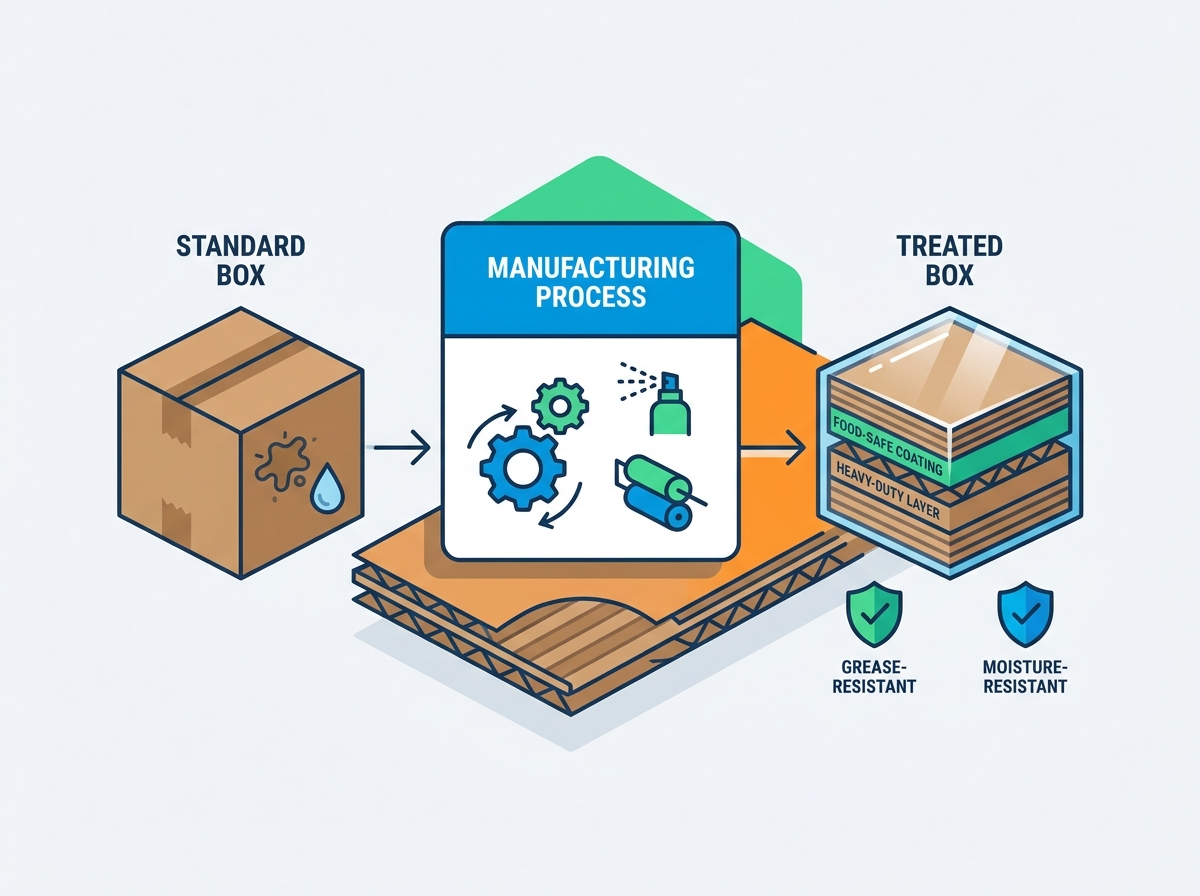
To combat the destructive forces of moisture and fat, manufacturers deploy specialized treatments. The primary manufacturing techniques used to create grease-resistant pizza packaging vary in performance, application methods, and environmental impact. Understanding these approaches helps buyers align their packaging specs with their operational needs.
One highly effective method involves applying a thin polyethylene (PE) or alternative polymer film directly to the interior linerboard. Manufacturers laminate or extrude this plastic layer onto the paper before the corrugation process begins. The extrusion process bonds the plastic directly to the paper fibers under high heat.
This approach offers the highest level of moisture and grease resistance available. The plastic film creates a near-waterproof corrugated pizza box interior that completely eliminates the risk of oil leaking through the bottom panel. The barrier physically blocks any liquid from reaching the paper fibers, maintaining 100 percent of the board's structural integrity regardless of the topping load. Delivery drivers can stack these boxes without fear of base blowout.
However, polymer linings present distinct disadvantages. The integration of plastic film complicates end-of-life recyclability. Most standard municipal pulping facilities cannot separate the PE layer from the paper fibers, forcing these boxes into landfills. The extrusion process also adds manufacturing complexity, requiring specialized machinery on the production line.
Modern aqueous coatings represent the current industry standard for balancing performance with environmental compliance. Manufacturers apply these water-based chemical mixtures during the paper milling or flexographic printing process. Once dried, the coating forms a microscopic, cross-linked grid over the paper surface.
This chemistry alters the surface tension of the linerboard. It repels oil and water molecules, forcing them to bead up rather than soak into the fibers. Unlike solid plastic films, aqueous coatings maintain the natural breathability of the paper. This allows a controlled amount of vapor to escape through the board itself, aiding in moisture management and preventing the crust from becoming soggy.
Water-based barriers interact favorably with high-speed flexographic printing. Brands can apply vibrant custom graphics directly over or alongside these coatings without risking ink smudging or adhesion failures. Because they do not rely on solid plastic lamination, aqueous-coated boxes generally pass repulpability tests, making them a highly sustainable choice for high-volume operations.
Some manufacturers achieve grease resistance without applying chemical coatings by altering the paper composition itself. Using tightly woven virgin kraft paper on the inside liner naturally resists grease penetration. Virgin fibers are longer and stronger than recycled fibers, allowing paper mills to compress them into a much denser sheet during the calendering process.
This high-density calendering process minimizes the porous space between fibers. While not entirely waterproof, a heavy virgin kraft liner significantly slows the capillary action of hot oils. In high-moisture environments, virgin fibers retain their structural rigidity much longer than recycled alternatives. The long fibers interlock more securely, providing superior burst strength and tear resistance. While virgin kraft requires specific sourcing, it provides exceptional durability and a clean, natural aesthetic without the need for synthetic additives.
Performance Comparison of Barrier Technologies
Coating / Material Type | Grease Resistance Level | Moisture Management | Recyclability Profile |
|---|---|---|---|
Uncoated Recycled Kraft | Low (Rapid Saturation) | Poor (Rapid Fiber Breakdown) | High (Easily Repulped) |
Polyethylene (PE) Lining | Maximum (Zero Penetration) | Excellent (Blocks Condensation) | Low (Requires Specialized Facilities) |
Aqueous (Water-Based) Coating | High (Repels Oil) | Good (Maintains Breathability) | High (Standard Pulping Compatible) |
High-Density Virgin Kraft | Moderate (Slows Penetration) | Very Good (Strong Fiber Bonds) | Maximum (Highly Desirable Fiber) |
Material composition only solves half the problem. The physical architecture of the box dictates heat retention, moisture management, and delivery logistics. Manufacturers engineer specific fluting profiles and ventilation patterns to translate flat paperboard into a high-performance delivery vessel.
The structural difference between corrugated board and single-layer folding cartons directly impacts food temperature. Industry data indicates that corrugated boxes keep food 15 to 25 percent warmer over a standard delivery window compared to single-layer alternatives. The fluted medium traps pockets of insulating air between the inner and outer liners, creating a thermal barrier against the outside environment. This trapped air acts exactly like insulation in a building wall.
Manufacturers typically utilize B-flute or E-flute profiles for pizza packaging. B-flute offers thicker arches, providing excellent cushioning and superior insulation. E-flute features a tighter, thinner wave pattern, delivering exceptional crush resistance and a smoother surface for high-quality printing. Both profiles provide the necessary rigidity to support heavy stacking during multi-drop deliveries. The choice between the two often depends on the specific weight of the food product and the graphic requirements of the brand.
Stacking strength degradation remains a primary concern for delivery fleets. Moisture and grease compromise the Edge Crush Test (ECT) rating of the board. If the vertical walls absorb steam, the ECT value plummets. Proper fluting, combined with moisture-resistant liners, ensures the bottom box in a stack of five does not buckle and crush the food inside. The corrugator machine must apply the exact amount of starch adhesive to bond the fluting to the liners; too much starch introduces excess moisture, while too little causes delamination.
Even the most advanced barrier coatings fail if the box design traps too much steam. Manufacturers must achieve a precise thermodynamic balance: venting enough vapor to prevent condensation buildup while retaining enough ambient heat to ensure food safety and customer satisfaction.
Engineers strategically place ventilation holes based on airflow dynamics. Rear corner vents allow steam to escape as heat naturally rises and pushes outward. Side wall half-moon cutouts provide cross-ventilation. Some designs feature adjustable tabs, allowing operators to open or close vents depending on the topping load and delivery distance. A heavy vegetable pizza requires maximum ventilation to prevent a soggy crust, while a standard cheese pizza might require closed vents to maximize heat retention. The die-cutting process must punch these vents cleanly to ensure they function properly in the field.
Selecting a packaging supplier involves more than just physical performance metrics. Regulatory compliance, sensory neutrality, and environmental impact heavily influence the overall value of the packaging. Buyers must rigorously evaluate these dimensions before finalizing a contract.
Manufacturers must hold specific certifications to produce food-safe corrugated pizza boxes. Any material making direct contact with consumable goods must meet stringent FDA guidelines regarding chemical migration and heavy metal content. The paper mills supplying the linerboard must also adhere to strict hygiene standards to prevent contamination during the pulping process.
The packaging industry has recently executed a massive shift away from PFAS (per- and polyfluoroalkyl substances). Historically, manufacturers used these chemicals to achieve highly effective grease resistance. Due to severe health and environmental concerns, buyers must now demand explicit, third-party documentation verifying that all barrier coatings and inks are 100 percent PFAS-free. Suppliers should provide certificates of analysis for every batch of coating applied.
Sensory neutrality is equally vital. Barrier coatings must remain stable under extreme temperatures. If a coating degrades when exposed to a 200-degree pizza, it can off-gas. This chemical release imparts synthetic odors and foul flavors directly into the food. High-quality manufacturers utilize inert, heat-stable aqueous coatings that preserve the exact taste profile intended by the chef. Testing for sensory neutrality involves baking the empty boxes at high temperatures and evaluating any emitted odors.
A persistent misconception exists regarding the recyclability of soiled pizza boxes. Historically, consumers were told to throw away the greasy bottom half of the box. However, recent municipal studies and paper mill guidelines have updated this stance. Research indicates that the average grease content in corrugated pizza boxes within the recycling stream is only 1 to 2 percent by weight.
Modern pulping facilities easily process this low level of grease. The choice of barrier coating directly impacts this repulpability. Aqueous coatings break down seamlessly during the recycling process, allowing the valuable long fibers of the kraft paper to be recovered and reused. Conversely, heavy PE linings disrupt the pulping screens and often result in the entire batch being diverted to a landfill. Selecting water-based coatings aligns high-performance delivery needs with aggressive corporate ESG (Environmental, Social, and Governance) goals.
Transitioning to a new packaging standard carries operational risks. Procurement teams must structure their sourcing process to validate manufacturer claims through rigorous testing and financial analysis.
Evaluating packaging requires analyzing the overall operational impact rather than just the per-unit invoice price. Standard, uncoated boxes present an attractive upfront saving. However, these savings quickly evaporate when structural failures occur. A box that leaks grease onto a customer's car seat triggers immediate refund requests and permanent customer churn.
Investing in engineered barrier coatings and optimal fluting reduces product loss, eliminates delivery damage, and protects the brand image. Procurement teams must calculate the hidden costs of packaging failure—including replacement orders, driver time, and negative social media exposure—when comparing supplier quotes. A slightly higher investment in a coated, high-ECT box pays off by eliminating the operational drag of delivery failures.
Never commit to a high-volume production run without verifying quality assurance data. Buyers should require manufacturers to provide specific technical specification sheets. Key metrics include the Edge Crush Test (ECT) rating for stacking strength, Cobb values to measure water absorption rates, and Kit testing results to quantify grease resistance levels.
The Cobb test measures how much water the paper absorbs over 60 seconds. A lower Cobb value indicates superior moisture resistance. The Kit test involves dropping aggressive chemical mixtures onto the paper to see which level penetrates the barrier. Higher Kit numbers indicate stronger grease resistance. ECT involves compressing a small block of corrugated board on its edge until it buckles, proving its vertical stacking strength.
Following data verification, execute a pilot testing phase. Request physical prototypes and test them using live food products under real-world conditions. Place a freshly baked, heavy-topping pizza in the prototype box, stack weights on top to simulate a multi-drop delivery, and let it sit for 45 minutes. Evaluate heat retention, crust crispness, lid sag, and bottom panel grease penetration. Only sign long-term contracts after the physical prototype passes these stress tests.
Essential QA tests to request from suppliers:
Edge Crush Test (ECT) documentation for stacking limits.
Cobb moisture absorption test results for the inner liner.
Grease resistance Kit testing scores.
PFAS-free certification for all coatings and inks.
Burst strength testing for puncture resistance.
Audit your current delivery packaging failure rates to identify specific weaknesses in grease resistance or stacking strength.
Define your corporate sustainability requirements regarding recyclability and chemical usage before contacting new suppliers.
Request physical samples and technical specification sheets from shortlisted manufacturers to verify ECT and Cobb test data.
Conduct live stress tests in your own kitchens using your heaviest, highest-moisture menu items to validate real-world performance.
A: Manufacturers replace PFAS with advanced, water-based aqueous coatings. These FDA-approved chemical mixtures are applied during the paper milling or printing process. They alter the paper's surface tension, causing oils to bead up rather than soak into the fibers. Some manufacturers also use high-density virgin kraft paper to naturally slow grease penetration.
A: Yes, if it lacks proper ventilation. A waterproof barrier stops moisture from escaping through the paperboard. If the steam released by the hot food cannot exit through engineered vent holes, it turns into condensation on the inner lid and drips back down, ruining the crust. Waterproofing requires strategic steam venting.
A: B-flute features thicker, taller arches, providing superior thermal insulation and excellent cushioning for heavy stacking during multi-drop deliveries. E-flute has a tighter, thinner wave pattern. While it offers slightly less insulation, E-flute provides exceptional crush resistance and a much smoother exterior surface, ideal for high-quality custom printing.
A: Yes, in most modern municipal recycling systems. Recent industry studies show that the average grease content in discarded pizza boxes is only 1 to 2 percent by weight. Modern pulping facilities easily process this minimal amount of oil. Boxes lined with heavy plastic films should still be thrown away.
A: Boxes collapse when moisture from trapped steam soaks into the paperboard. Water disrupts the hydrogen bonds holding the cellulose fibers together, causing the corrugated fluting to soften and lose its vertical compression strength. Once weakened by moisture or saturated by grease, the box cannot support stacked orders.
A: Aqueous coatings interact favorably with custom printing. Because they are water-based and applied in thin, even layers, they do not interfere with high-speed flexographic printing processes. They allow inks to adhere properly without smudging, ensuring that branding and graphics remain vibrant and sharp even under high heat.


