
Views: 0 Author: Site Editor Publish Time: 2026-08-27 Origin: Site


Restaurant operators face a constant operational tension. Consumer demand and municipal regulations push hard for sustainable packaging. However, tight food service margins cannot easily absorb increased unit costs. Traditional corrugated boxes work well but fail sustainability tests due to heavy grease contamination and non-recyclable chemical coatings. Conversely, premium sustainable alternatives often carry markups that threaten overall profitability.
Achieving cost parity for sustainable packaging is entirely possible. It requires partnering with a technically capable pizza packaging box manufacturer. You do not have to choose between protecting your margins and meeting environmental standards. By evaluating suppliers based on material science, manufacturing efficiency, and brand-boosting potential, you can source high-performance packaging. This framework helps you assess suppliers, optimize structural box designs, and transition to green materials without inflating operational expenses.
Cost parity in eco-friendly pizza boxes is achievable when manufacturers leverage economies of scale, localized material sourcing, and optimized box structural designs.
Not all "green" claims are equal; buyers must evaluate suppliers on verified certifications (FSC, BPI) and avoid common eco-packaging mistakes, such as ignoring local municipal waste infrastructure.
Switching to sustainable materials requires a strict audit of thermal retention, structural stackability, and food-safe compliance to prevent operational failures during delivery.
Strategic design choices—such as minimalist flexographic printing, water-based inks, and multi-use perforations—can offset the premium costs of biodegradable substrates while enhancing the customer experience.
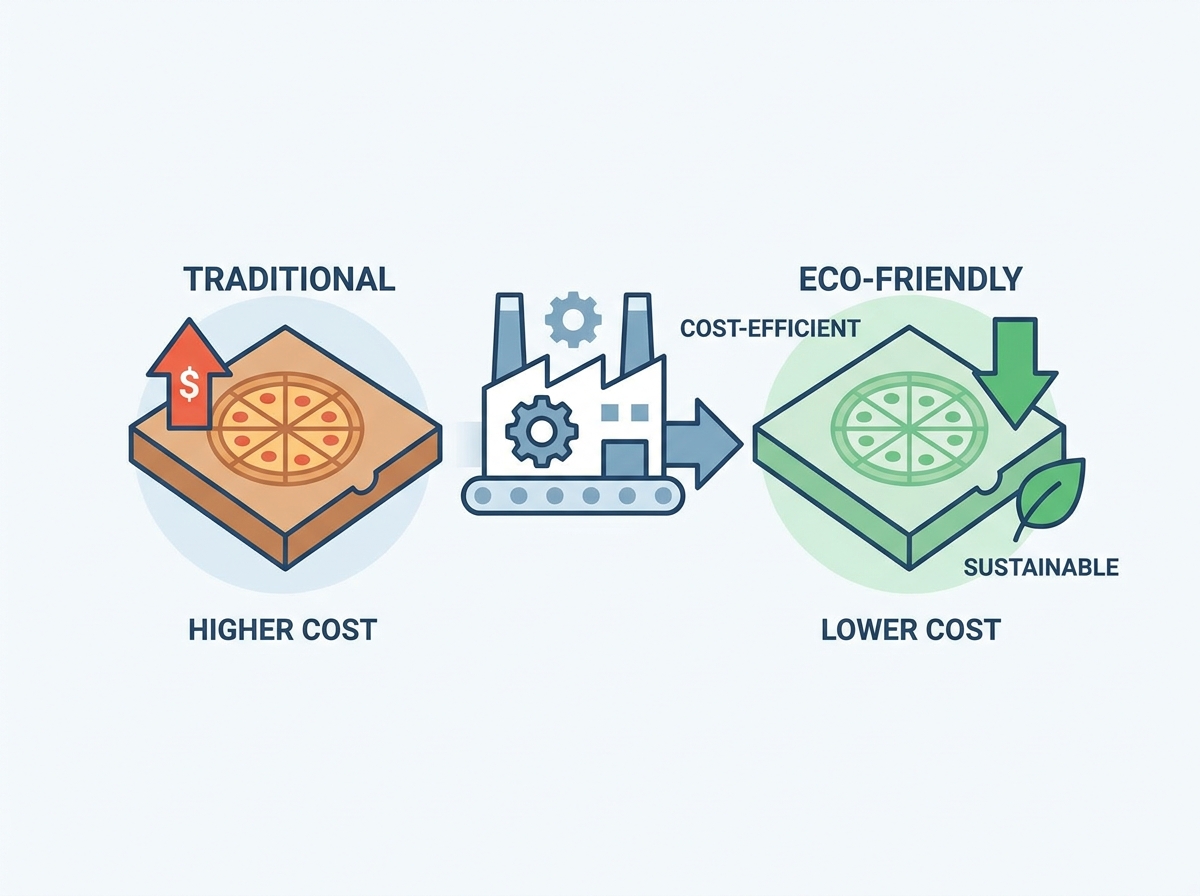
Understanding the baseline price difference between standard virgin corrugated board and recycled alternatives is the first step in your evaluation. Virgin corrugated cardboard relies on freshly harvested wood pulp. The supply chain for this material is highly established, deeply commoditized, and optimized for maximum output. Paper mills churn out virgin kraft linerboard at massive speeds. This keeps the per-unit price exceptionally low. Recycled or compostable alternatives introduce different variables. Sourcing post-consumer waste, cleaning the fibers, removing old inks, and reforming them into durable kraft board requires specialized processing that historically drove up costs.
The drivers of this premium pricing stem from intensive research and development. Manufacturers spent years engineering plant-based coatings to replace cheap plastic barriers. Specialized manufacturing processes were required to apply these new coatings without slowing down the corrugator machines. Furthermore, lower initial market demand meant suppliers could not buy raw sustainable materials in massive bulk. The lack of scale kept prices artificially high for early adopters in the restaurant space. Factories had to halt production lines to switch between standard and eco-friendly runs, resulting in high setup fees passed down to the buyer.
Today, a modern manufacturer drives down these costs through several mechanical and strategic mechanisms. High-volume production runs allow facilities to amortize setup costs across millions of units. Advanced engineering enables suppliers to reduce board grade thickness without losing flute strength. By utilizing precise E-flute or micro-flute profiles, factories use less raw paper per box while maintaining structural rigidity. Modern die-cutting machines operate with incredibly tight tolerances, minimizing waste. Less scrap cardboard on the factory floor directly translates to lower costs for the end buyer. When a factory runs efficiently, the cost delta between virgin and recycled board shrinks significantly.
Cost discussions must extend beyond the per-unit invoice price. Operators must factor in operational savings and marketing returns. Municipalities increasingly penalize businesses for generating excessive non-recyclable waste. Switching to compostable materials often reduces commercial waste disposal fees for your operation. Furthermore, compliance with local single-use plastic bans prevents costly fines and operational disruptions. Beyond savings, eco-conscious packaging serves as a branding powerhouse. Customers actively seek out restaurants that align with their environmental values. Sustainable packaging builds customer loyalty, driving repeat orders that far outweigh a fractional increase in box costs. When you market your packaging as a commitment to the community, it becomes a customer acquisition tool rather than a sunk operational expense.
Evaluating eco-friendly pizza boxes requires a deep dive into the specific substrates used during production. Recycled corrugated cardboard, commonly known as kraft board, is the most accessible option. However, operators must evaluate the structural integrity of post-consumer recycled content versus virgin fibers. Every time paper fibers are recycled, they become shorter and slightly weaker. A box made from 100% recycled content may feel softer or more prone to bending under heavy loads. You have to test the Edge Crush Test (ECT) rating to ensure it meets your delivery demands.
Recycled fibers also face severe limitations in high-moisture environments. Steaming hot food releases significant condensation inside the closed carton. Weakened recycled fibers absorb this moisture rapidly, leading to soggy, collapsing boxes. Suppliers overcome this by blending a specific ratio of virgin fibers with recycled content. They also utilize tighter flute profiles to reinforce the board. This hybrid approach ensures the box remains rigid during transit while still diverting waste from landfills. You get the environmental benefit without the operational failure of a collapsed lid.
Compostable and biodegradable substrates represent the next tier of sustainability. Operators must differentiate between industrially compostable and backyard compostable materials. Industrially compostable boxes require extreme heat and pressure found only in commercial facilities to break down. Backyard compostable materials will degrade naturally in a standard home compost pile. The shift toward these materials involves replacing traditional plastic or PFAS grease barriers. Advanced plant-based, biodegradable coatings now provide excellent grease resistance while allowing the entire box to break down naturally over time. These coatings are applied during the corrugation process, ensuring an even barrier that stops oil penetration.
The grease contamination reality remains a massive hurdle for the industry. Pizza oil renders standard cardboard completely unrecyclable. When grease soaks into the paper fibers, it ruins the pulp mixture at recycling plants, causing entire batches of recycling to be sent to the landfill. Manufacturers now engineer boxes specifically to combat this issue. Specialized fluting creates a physical barrier that slows oil absorption. Some suppliers utilize compostable parchment inserts to catch the grease before it touches the cardboard. Others design boxes with tear-away lids. This allows the consumer to rip off the clean top half for standard recycling, while discarding the heavily soiled bottom half. This hybrid disposal method is highly effective for municipal compliance.
Comparison of Pizza Packaging Substrates
Substrate Type | Structural Integrity | Moisture Resistance | End-of-Life Disposal |
|---|---|---|---|
Virgin Corrugated | Excellent - High rigidity for stacking | Moderate - Absorbs heavy grease without coatings | Recyclable (only if uncontaminated by grease) |
Recycled Kraft Board | Good - Slightly softer fibers | Low to Moderate - Prone to softening under heavy steam | Recyclable / Industrially Compostable |
Plant-Coated Compostable | Good - Reinforced by advanced coatings | High - Repels grease and condensation effectively | Backyard or Industrially Compostable |
Selecting the right manufacturing partner dictates the success of your packaging rollout. Supply chain transparency is a non-negotiable metric. Assess the supplier's ability to trace raw materials directly to sustainably managed forests. Look for verified Forest Stewardship Council (FSC) certifications. This guarantees the wood pulp was harvested legally and ecologically, protecting old-growth forests. Furthermore, evaluate the geographic proximity of their manufacturing plants to your distribution centers. Shipping empty cardboard boxes across the ocean generates massive carbon emissions and inflates freight costs. Localized manufacturing minimizes your carbon footprint and stabilizes delivery timelines, ensuring you never run out of boxes on a busy weekend.
Compliance dictates operational safety. Food-safe pizza packaging must meet strict regulatory baselines. FDA compliance for direct food contact is the absolute minimum standard. You must verify the absence of PFAS in any grease-resistant coatings. PFAS, known as forever chemicals, were historically used to prevent oil soak-through. They are now linked to severe health risks and are actively being banned across various jurisdictions. Demand testing certificates proving the coatings are entirely plant-based and chemical-free. If a supplier hesitates to provide these documents, walk away.
Design and value-add engineering directly impact your bottom line. Custom pizza takeout boxes can be heavily branded without sacrificing sustainability. The secret lies in minimalist design strategies. Full-bleed, heavy ink coverage inhibits the recycling and composting process. Instead, utilize one or two colors. Specify water-based or soy-based inks. Reducing the total ink coverage lowers manufacturing costs and drastically improves the compostability of the final product. A clean, minimalist logo stamped on raw kraft board often looks more premium and authentic than a glossy, full-color print.
Structural innovations offer another layer of value. Manufacturers can engineer built-in perforations directly into the die-cut template. These perforations allow the consumer to easily tear the lid into four individual serving plates. The bottom half can be folded into a smaller storage container for leftovers. This eliminates the need for the consumer to use secondary paper plates or plastic wrap, reducing overall household waste and elevating the takeout experience. These die-cut additions cost very little to implement during the manufacturing phase but provide massive utility to the end user.
To properly audit a supplier's capabilities, follow this evaluation sequence:
Request their FSC and BPI certification numbers and verify them through the respective official databases.
Ask for a detailed breakdown of their ink sourcing, specifically confirming the use of water-based or soy-based alternatives.
Demand a chemical composition report for any grease-resistant coatings to guarantee they are 100% PFAS-free.
Evaluate their die-cutting tolerances by requesting samples of perforated boxes to test the tear strength manually.
Review their freight routing to ensure the shipping distance from their plant to your store aligns with your carbon reduction goals.
Balancing eco-friendly materials with real-world delivery performance requires a strict trade-off framework. Thermal insulation is the primary concern for any operator. You must compare the thermal dynamics of eco-friendly materials against traditional, heavily coated boxes. Heat retention relies heavily on the trapped air within the corrugated flutes. The flute profile dictates both material usage and insulation capability. You cannot simply choose the thinnest board to save trees; you have to ensure the food stays hot.
E-flute board is thinner, uses less paper, and costs less to produce. However, its smaller air pockets provide slightly less insulation than the thicker B-flute. B-flute offers superior heat retention and crush resistance but requires more raw material, increasing the environmental footprint. Operators must examine the synergy between the box and reusable insulated delivery bags. A high-quality delivery bag traps ambient heat effectively. This allows the restaurant to use a thinner, more sustainable E-flute box without sacrificing the temperature of the food upon arrival. You do not need heavy, non-recyclable box coatings if your secondary delivery equipment performs correctly.
Structural integrity and stackability cannot be compromised. High-volume delivery runs often require drivers to stack four or five large orders on top of each other. The risk of box crush is significant. Reducing material weight for sustainability must be carefully balanced with the physical demands of holding steaming, heavy food. If the bottom box collapses, the cheese sticks to the lid, resulting in refunds and lost customers. A reliable pizza delivery box supplier will test their board grades under simulated high-humidity, high-weight conditions. They will provide Edge Crush Test (ECT) scores that prove the recycled board can handle the weight of multiple stacked pies.
Ventilation engineering plays a critical role in maintaining food quality. Hot food releases steam. If that steam cannot escape, the crust becomes soggy and unappetizing. Die-cut perforations and steam release vents are mandatory. However, adding too many vents compromises the structural integrity of the corners. It also slightly increases manufacturing complexity. The supplier must calculate the exact size and placement of these vents to allow moisture out while keeping maximum heat in, all without weakening the stacking strength of the carton. Vents placed too close to the structural folds will cause the box to buckle under pressure.
Flute Profile Performance Metrics
Flute Type | Thickness | Heat Retention | Stacking Strength | Material Efficiency |
|---|---|---|---|---|
B-Flute | Approx. 1/8 inch | High | Excellent | Lower (Uses more paper) |
E-Flute | Approx. 1/16 inch | Moderate | Good | High (Uses less paper) |
F-Flute | Approx. 1/32 inch | Low | Fair | Maximum (Highly sustainable) |
Transitioning to sustainable packaging carries distinct operational risks. Minimum Order Quantities (MOQs) present a major cash flow challenge. Manufacturers require high MOQs to justify the setup costs of custom eco-friendly runs. Tying up capital in six months of packaging inventory is dangerous for independent operators. To mitigate this, negotiate phased delivery schedules where the manufacturer holds the bulk inventory and ships pallets monthly. Alternatively, partner with a supplier that offers standardized eco-friendly blanks. You can then use localized custom stamping or branded stickers to achieve a custom look without the massive upfront volume commitment.
Greenwashing remains a prevalent trap. Purchasing boxes labeled "biodegradable" is a mistake if those boxes require specific industrial facilities that do not exist in your region. If the local waste management infrastructure cannot process the material, it ends up in a landfill anyway. Failing to educate consumers on proper disposal compounds the issue. Demand third-party testing data from your supplier. Align your packaging choices strictly with your local municipal waste capabilities. Print clear, idiot-proof disposal instructions directly on the box lid. Tell the customer exactly which bin the box belongs in.
Switching from a legacy supplier introduces friction at the store level. Inconsistent sizing can cause the new boxes to jam in existing storage racks. Different die-cut patterns change the folding friction for your staff. During a Friday night rush, a box that takes three extra seconds to fold causes massive operational bottlenecks. Never commit to a full contract without requesting prototype samples. Conduct in-store stress testing. Measure folding speed, expose the boxes to heat lamps for thirty minutes, and run simulated delivery routes to ensure the new design performs flawlessly.
Execute this in-store stress test protocol before signing a contract:
Time your fastest prep cook folding 50 legacy boxes versus 50 new eco-friendly prototypes.
Place a freshly baked, heavy-topping pie in the prototype box and leave it under the heat lamp for 20 minutes to check for bottom sagging.
Stack five loaded prototype boxes on a prep table and measure any deflection or crushing on the bottom box.
Place the loaded box in your standard insulated delivery bag, zip it shut, and let it sit for 30 minutes to evaluate steam ventilation and crust sogginess.
Pour a tablespoon of hot grease directly onto the inside of the lid and time how long it takes to soak through to the exterior branding.
Audit your current packaging spend and identify your exact monthly volume to leverage better negotiations. Request material specification sheets and unbranded prototype samples from at least three different suppliers. Conduct live thermal and grease-soak tests in your own kitchen under peak operational conditions. Redesign your artwork to utilize minimal, water-based ink coverage to lower costs and improve compostability. Train your front-of-house staff on the new folding mechanics to prevent bottlenecks during peak hours.
A: Not necessarily. While 100% recycled fibers are inherently shorter and slightly softer, manufacturers overcome this by blending virgin fibers or utilizing tighter flute profiles like E-flute. When engineered correctly, eco-friendly boxes provide identical stacking strength and crush resistance during delivery.
A: Grease ruins the recyclability of standard cardboard. Oil binds to the paper fibers and contaminates the water-based pulping process at recycling facilities. Heavily soiled boxes must be composted or sent to a landfill. Tear-away lids help salvage the clean top half for recycling.
A: The biggest mistake is ignoring local waste infrastructure. Buying industrially compostable boxes is useless if your city lacks commercial composting facilities. Other mistakes include failing to test folding speed with staff and using heavy, non-eco-friendly inks that negate the box's compostability.
A: Water-based inks are generally cost-neutral compared to traditional petroleum-based inks. The actual cost savings come from reducing the total ink coverage. Minimalist designs utilizing one or two colors significantly lower printing costs while making the box easier to compost.
A: Always demand FDA compliance for direct food contact. Look for Forest Stewardship Council (FSC) certification for sustainable wood sourcing. For compostable claims, verify the materials hold Biodegradable Products Institute (BPI) certification. Ensure all grease-resistant coatings are certified PFAS-free.
A: Yes. Thermal retention relies on the trapped air within the corrugated flutes, not just the paper type. By selecting the correct flute profile and pairing the box with high-quality insulated delivery bags, recycled materials perform exceptionally well at retaining heat.
A: Biodegradable means the material will eventually break down naturally, but it leaves no guaranteed timeframe and may leave micro-residues. Compostable means the material breaks down into nutrient-rich organic matter within a specific timeframe without leaving toxic residue.


