
Views: 0 Author: Site Editor Publish Time: 2026-05-23 Origin: Site


Have you ever received a delivery pie ruined by crushed toppings or a soggy crust? Incorrect packaging directly correlates to negative customer reviews and lost revenue. Pizzerias lose thousands of dollars annually when poor packaging ruins their food quality. Selecting the right pizza box goes far beyond matching simple diameters. Procurement teams must calculate crust depth, topping weight, thermal dynamics, and assembly labor costs. The stakes are remarkably high for modern delivery businesses.
We created this data-driven framework to solve these exact operational challenges. Restaurant owners and procurement managers need reliable, practical guidelines. You will learn exactly how to match specific pizza styles to the correct dimensions, materials, and structural designs. This comprehensive guide ensures your food always arrives looking and tasting perfect. By optimizing your packaging strategy, you can protect your margins and delight every single customer.
Always size up slightly: The box interior should be 0.5 to 1 inch larger than the pizza diameter to ensure easy removal and protect the crust edge.
The 14-inch box is the industry standard "sweet spot," offering the best balance of portion sizing, pricing margins, and operational ease.
Crust style dictates box height: Thin-crust pizzas require lower profiles to minimize shifting, while deep-dish and heavily loaded specialty pizzas demand boxes taller than the standard 1.75 to 2 inches.
Structural integrity scales with size: Standard 9–13 inch pizzas work well with E-flute cardboard, but 14+ inch pizzas require thicker B-flute material to prevent center-sagging.
Balancing thermal retention with ventilation is critical to preventing soggy crusts during delivery.
Industry sizing standards help you manage inventory and meet consumer expectations. Buyers rely on these baseline measurements to keep operations running smoothly. Standardizing your boxes reduces confusion in the kitchen. Let's look at the practical applications for these universal dimensions.
Category | Dimensions (Inches) | Slice Count | Best Use Cases |
|---|---|---|---|
Personal / Slice | 7"x7"x2" to 10"x10"x2" | 1-4 Slices | Children's menus, food trucks, single-serve portions. |
Medium | 12"x12"x2" to 14"x14"x2" | 8-10 Slices | Couples, small families, high-margin delivery items. |
Large | 16"x16"x2" to 18"x18"x2" | 12 Slices | Family gatherings, specialty loaded pies, parties. |
Extra-Large | 20"x20"x2"+ | 14-16 Slices | Catering events, New York style slices, bulk orders. |
Personal boxes range from 7"x7"x2" up to 10"x10"x2". They hold one to two slices or very small four-slice pies. You will use them primarily for children’s menus. They also fit single-serve portions perfectly. Food trucks rely heavily on these smaller dimensions. Triangular slice boxes offer high efficiency for fast-casual operations. They reduce material waste and save counter space. Customers appreciate the compact, easy-to-carry format.
The 14"x14"x2" box typically holds 8 to 10 slices. This 14-inch size represents the most popular industry seller globally. It hits the perfect margin ratio. Couples and small families buy this size most often. You also gain significant operational advantages. These boxes stack easily for delivery drivers. They balance portion sizing and pricing margins effectively. Most kitchens calibrate their ovens specifically around the 14-inch standard.
Large dimensions run from 16"x16"x2" up to 20"x20"x2". These massive boxes serve 12 to 16 slices. Implementation realities change drastically at this scale. You need upgraded structural support. Standard materials will fail under the heavy load. Thicker corrugated cardboard becomes absolutely mandatory. This sturdy material prevents the lid from bowing downward. Without it, the box sags under its own weight. Heat radiating from large pizzas worsens this dangerous sagging effect.
One size does not fit all in the delivery business. You must match box volume to crust and topping architecture. Ignoring this rule guarantees damaged products.
Thin-crust pizzas require a significantly lower overall box height. Aim for internal profiles closer to 1.5 or 1.75 inches. This deliberate design reduces excess empty space. Lightweight pizzas slide easily during turbulent transit. A lower roof limits this unwanted horizontal movement. It also minimizes rapid heat loss. Your delicate Neapolitan pies stay hotter for much longer. Less air volume means better thermal retention.
These hefty pies require custom depths. Standard 2-inch heights will fail you miserably here. Deep-dish pizzas feature incredibly thick crust walls. They contain heavy, molten cheese layers. Standard lids will press directly into the cheese. This ruins the presentation instantly. The premium cheese sticks permanently to the lid. Customers despise losing half their toppings to cardboard. Choose taller boxes specifically designed for these robust items.
Adopt the "Size Up" strategy for specialty orders. Irregular topping heights demand extra breathing room. Heavy garnishes require both vertical and horizontal buffer zones. Upsizing prevents aggressive side-crushing. It also stops messy lid-smearing during bumpy car rides. Always leave room for big crust bubbles and tall ingredients. A slightly larger box protects your culinary artwork.
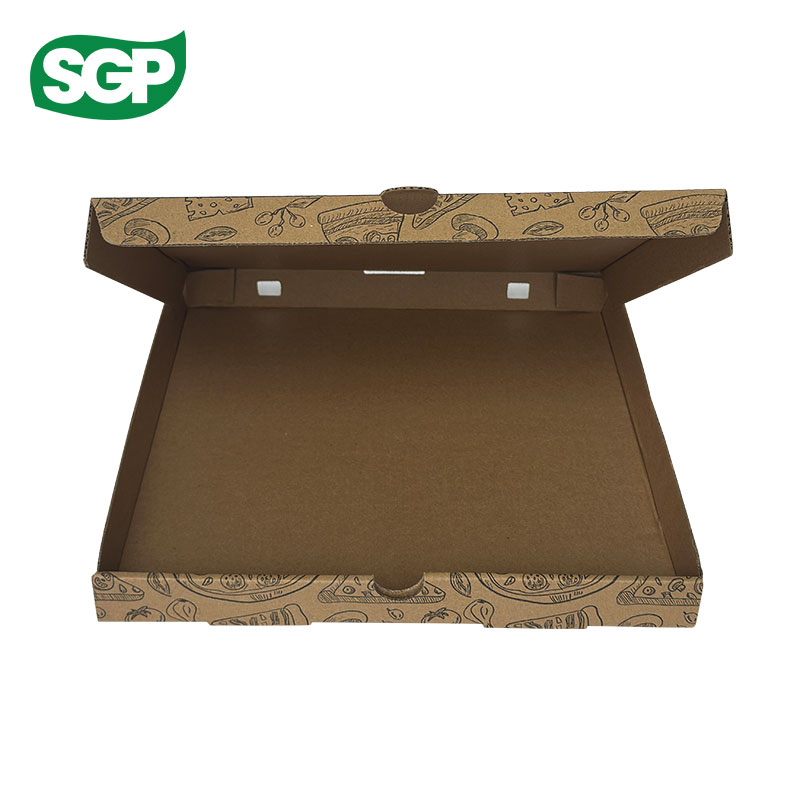
Packaging physics determines overall food integrity. You must protect the product aggressively from oven to customer. Structural engineering solves these transit issues.
Fluting gives corrugated cardboard its essential strength. The arched paper layers dissipate downward force efficiently.
E-flute: This material measures approximately 1.5mm thick. It offers excellent printability for complex logos. You get sufficient strength for standard sizes. Standard 9 to 13-inch pizzas perform perfectly well inside E-flute boxes.
B-flute: This material measures about 3mm thick. It provides maximum crush resistance. You must use B-flute for 14-inch and larger pies. Heavy deep-dish styles also require this robust material. It completely prevents disastrous center-sagging during multi-box deliveries.
Delivery creates a very complex thermal paradox. Boxes must retain heat to keep food appetizing. However, they absolutely cannot trap hot steam. Trapped steam creates soggy, unappealing crusts. Look for strategically placed ventilation holes. These vents balance internal temperatures automatically. They allow excess moisture to escape safely. Your crust remains delightfully crisp upon arrival.
Modern consumers demand eco-friendly choices from their favorite restaurants. Consider the incredible operational benefits of Double-Sided Kraft Pizza Boxes. They offer superior grease resistance compared to cheap alternatives. They provide excellent overall durability. These boxes maintain a beautiful, unbleached profile. This natural look appeals strongly to sustainability-minded buyers. They perform exceptionally well while drastically reducing environmental impact.
Procurement logic requires careful financial analysis. Let's examine unit pricing, scalability, and long-term brand equity.
Feature Comparison | Generic Packaging | Custom Branded Packaging |
|---|---|---|
Unit Cost | $0.10 to $0.50 per unit | $0.20 to $1.00+ per unit |
Lead Time | Immediate availability | 3-6 weeks production time |
Brand Equity | Zero brand recognition | High local market visibility |
Minimum Order | Very low (100-500 units) | High (10,000+ units) |
Cost expectations range from $0.10 to $0.50 per unit. A Generic Design Pizza Box serves many practical use cases beautifully. Pop-ups use them frequently to conserve cash. New pizzerias testing the local market rely on them heavily. They prioritize raw volume over brand real estate initially. You get immediate cost reduction. This keeps your early financial risks extremely low.
Custom printing ranges from $0.20 to $1.00+ per unit. Ink coverage and material choices dictate the final price. Packaging acts directly as a billboard. You send your logo right into customer homes. Established brands find this marketing channel essential. It builds powerful local recognition. A striking custom box generates organic social media sharing.
Box assembly time directly equals labor cost. Intricate box shapes fold quite slowly. Octagonal boxes look premium and unique. However, they drain valuable staff time. Imagine folding hundreds of complex boxes during a Friday rush. Standard square boxes fold much faster. Cut-corner styles also offer impressively quick assembly. Always evaluate interlocking flap designs carefully. They must ensure quick, highly secure closure. Time spent folding boxes silently cuts into your profit margin.
Identify operational blind spots early. Mitigate risks before they systematically hurt your brand reputation.
Overstuffing or Underfilling: Never force a 16-inch pizza into a 15.5-inch box. You will violently crush the crust edges. Conversely, avoid putting a 10-inch pizza inside a 14-inch box. The pie will slam against the cardboard walls. Transit damage ruins the customer experience entirely.
Ignoring Grease Resistance: Standard untreated cardboard absorbs bottom grease rapidly. This weakens the entire structural foundation. The box becomes flimsy and unappealing. Grease saturation also makes cardboard completely un-recyclable. Always specify grease-resistant liners. You can also upgrade to thicker, treated base materials.
Neglecting Stacking Mechanisms: High-volume delivery requires exceptionally secure stacking. Drivers carry multiple orders simultaneously. Boxes urgently need interlocking tabs. Friction-resistant surfaces help immensely. Smooth, tab-free boxes slide off delivery bags easily. Dropped orders destroy your nightly profits and anger loyal customers.
Selecting the perfect packaging requires a highly balanced approach. You must evaluate physical dimensions strictly. Measure both diameter and depth carefully before ordering. Consider critical structural requirements like fluting thickness and proper ventilation. Finally, weigh your unit economics against your branding goals.
Procurement managers must audit their current menus immediately. Identify your thickest and heaviest specialty pizzas. Request physical samples from your trusted suppliers. Test both standard and custom sizes thoroughly. Run real-world transit simulations inside driver vehicles. Conduct rigorous heat-retention tests over 30-minute intervals. These proactive action steps guarantee superior delivery performance.
A: No. While a 14-inch box can technically hold a 12-inch pizza, the excess space causes shifting. Furthermore, deep-dish pizzas require taller boxes to prevent lid-sticking, regardless of diameter. You need distinct sizes for different menu categories.
A: Yes, but conditionally. Corrugated cardboard is 100% recyclable. However, sections heavily saturated with grease or baked-on cheese disrupt the recycling process. Customers should be educated to tear off and recycle the clean lid while composting or trashing the soiled base.
A: Angled corners reduce the amount of cardboard needed. This slightly lowers material costs. More importantly, it actually increases the structural rigidity of the corners. This clever engineering helps prevent catastrophic crushing during heavy stacking.


