
Views: 0 Author: Site Editor Publish Time: 2026-05-23 Origin: Site


The quality of a delivered pizza relies entirely on the packaging protecting it from the oven to the customer's door. A perfect pie quickly loses its charm if it arrives cold, crushed, or stuck to the cardboard. You spend hours perfecting dough and sourcing premium toppings. Your packaging must uphold those high culinary standards.
Substandard packaging leads to soggy crusts, rapid heat loss, and crushed toppings during transit. These specific issues ultimately trigger poor reviews and lost repeat business. Choosing the wrong materials actively harms your brand reputation and bottom line. Food delivery apps have expanded delivery radiuses, making packaging durability more crucial than ever.
Selecting the right material requires balancing thermal insulation, moisture ventilation, structural integrity, food safety compliance, and per-unit cost parameters. In this guide, we will explore various flute grades, paper compositions, and evaluation criteria. You will learn exactly how to match your operational needs to the perfect pizza box for your menu.
Flute size matters: B-flute and E-flute corrugated cardboard offer different ratios of stacking strength to heat retention.
Moisture control is paramount: A balance of material absorbency and vent placement prevents condensation from ruining the crust.
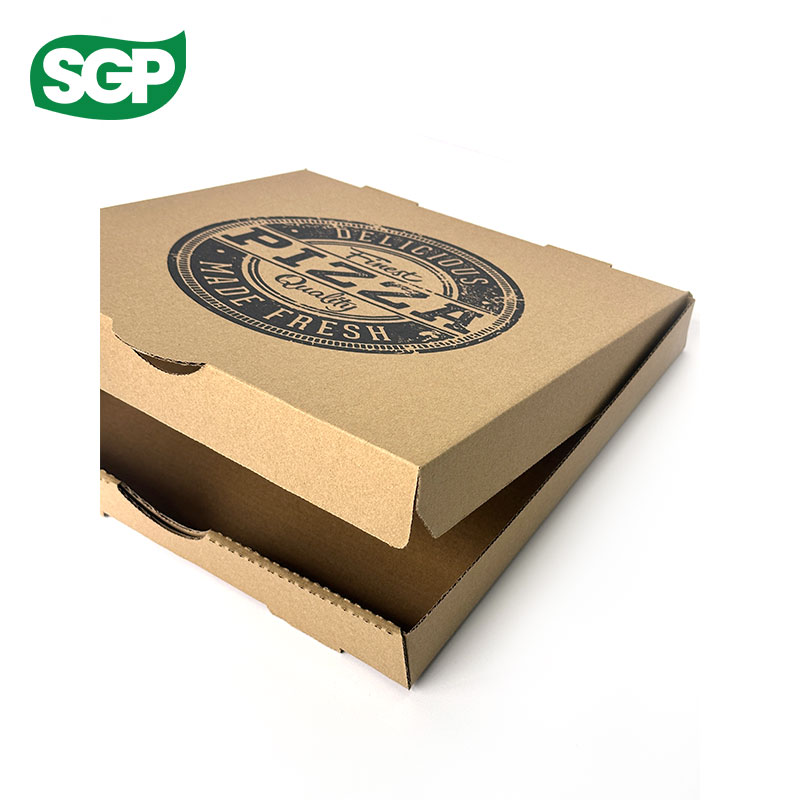
Branding scales with budget: Operators can start with a Generic Design Pizza Box and scale up to Single-Color Kraft Pizza Boxes or fully custom prints as volume increases.
Operational footprint dictates choice: Flat-pack storage requirements, assembly speed, and supply chain lead times are just as critical as the material itself.
Hot food inherently releases steam. Balancing the need to trap heat inside the container while allowing steam to escape remains a primary challenge. You want the crust to maintain its crispness. However, trapped steam quickly converts back into water droplets. This condensation drips onto the food. It ruins the texture of artisan crusts. Proper packaging solves this paradox through strategic venting and slight material absorbency. Vents must allow just enough airflow to release excess moisture without dropping the internal temperature below acceptable food safety standards.
Delivery drivers rarely transport just one order. They stack boxes four or five deep inside insulated delivery bags. Evaluating how materials perform under this weight is critical. Weak materials collapse and damage the product below. Heat softens cheap cardboard significantly. When the lid sags, it presses directly into the hot cheese. Customers despise peeling cardboard off their dinner. You must choose a material resilient enough to withstand high heat, moisture, and downward pressure simultaneously. Robust structural integrity prevents these common delivery disasters.
Certain pizza styles carry significant amounts of surface oils. Assessing how well the material prevents grease from soaking through to the exterior is vital. Grease migration compromises box strength rapidly. A grease-soaked bottom tears easily during handling. Furthermore, it soils customer countertops and tables. This creates a messy, unappetizing dining experience. High-quality paper compositions block oil penetration. They keep the exterior clean and maintain the rigidity of the base. Preventing grease bleed-through directly influences how customers perceive your hygiene and quality standards.
The regulatory landscape for food packaging is changing rapidly. Navigating local regulations regarding PFAS (forever chemicals) in food packaging requires constant vigilance. Many municipalities have banned these harmful grease-proofing agents entirely. Simultaneously, you must address shifting consumer demands for compostable materials. Diners increasingly expect eco-friendly packaging options. Using non-compliant materials can result in hefty fines. It also generates negative public relations. You must verify supplier certifications to ensure all base materials and inks meet current environmental legislation.
Corrugated cardboard remains the industry standard. It features a fluted medium sandwiched between two flat linerboards. The size of this flute dictates performance.
B-Flute: This variant is thicker and highly robust. It measures approximately 3.2mm in thickness. It proves excellent for stacking heavy, deep-dish, or multi-topping pizzas. The larger flutes trap more air, providing superior thermal insulation. However, it requires significantly more storage space.
E-Flute: This option features a thinner profile at roughly 1.6mm thick. It takes up less storage space in crowded kitchens. The tighter flute spacing provides excellent print surfaces for intricate logos. It works best for thin crust or artisanal pizzas where heavy structural support is less critical.
The paper type used for the inner and outer liners impacts durability and appearance.
Virgin Kraft: Manufactured directly from wood pulp. It offers superior strength and high tear resistance. Long paper fibers create a tight, durable web. It provides exceptional grease holdout naturally. Virgin kraft is the premium choice for heavy, greasy menu items.
Recycled Testliner: Made from recycled paper products. It is more environmentally friendly and cost-effective. However, the recycling process shortens the paper fibers. This makes the board structurally weaker. It can be more prone to moisture absorption if not treated properly. It suits lighter, drier pizzas perfectly.
The outermost layer affects both branding capabilities and moisture resistance.
Clay-Coated: This treatment provides a smooth, white surface. It is ideal for sharp, multi-color branding. The clay fills the natural pores of the paper. This creates an excellent canvas for lithographic printing. It also adds a slight barrier against exterior moisture.
Uncoated Kraft: This finish offers an organic, artisanal look and feel. It leaves the natural brown paper fibers exposed. It is naturally more breathable than coated variants. Many boutique pizzerias prefer this aesthetic. It signals a rustic, handmade product to the consumer.
Every operational decision involves a financial tradeoff. Weighing the upfront cost of premium E-flute or B-flute materials against potential losses is necessary. Cheaper packaging saves money initially. However, it often results in customer refunds for cold or damaged food. You must calculate the hidden costs of poor heat retention. A premium box might cost pennies more per unit. Yet, it preserves product quality across a five-mile delivery radius. Protecting your core product often yields higher profitability than slashing packaging budgets blindly.
Your packaging serves as a mobile billboard. Customers walk through neighborhoods carrying your logo. Choosing the right branding tier depends on your growth stage.
Baseline: Using a Generic Design Pizza Box helps minimize upfront costs. You eliminate custom tooling and printing plate fees entirely. This approach works perfectly when launching a new concept or operating a small ghost kitchen.
Mid-Tier: Upgrading to Single-Color Kraft Pizza Boxes offers an economical, minimalist branding approach. It establishes local identity without premium print costs. One-color flexographic printing is highly affordable. It elevates brand perception instantly.
Premium: Established franchises often utilize high-gloss, multi-color lithographic prints. High-volume runs offset the expensive setup costs. This tier supports complex artwork, QR codes, and vivid promotional messaging.
Kitchen square footage is incredibly expensive. Calculating the physical footprint of flat-packed boxes is a crucial operational step. Thicker flutes require significantly more dry storage space in the back-of-house. You must balance material thickness against your available shelving.
Feature | B-Flute Cardboard | E-Flute Cardboard |
|---|---|---|
Thickness | ~3.2mm (Thick) | ~1.6mm (Thin) |
Stacking Strength | Excellent for heavy loads | Moderate, best for lighter loads |
Storage Footprint | High (Requires more shelf space) | Low (Highly space-efficient) |
Print Quality | Good (Slight ribbing visible) | Excellent (Smooth, flat surface) |
Best Application | Deep dish, heavy toppings | Thin crust, artisanal, Neapolitan |
Packaging must support kitchen workflow. Boxes featuring complex folding mechanisms can slow down the kitchen line during Friday night rushes. Time-to-assemble must be tested rigorously. A design requiring ten seconds to fold creates a massive bottleneck. If you sell five hundred pies a night, those extra seconds compound quickly. Staff frustration mounts when materials are difficult to assemble. Choose designs featuring simple, intuitive folds. Front-fold designs generally offer the fastest assembly times. Streamlining this process keeps the kitchen moving efficiently.
Procurement delays can paralyze your business. Custom prints require longer lead times and higher minimum order quantities (MOQs). Failing to forecast volume accurately can leave a kitchen without packaging. You cannot serve food without safe containers. Generic options ship quickly. Custom runs often take weeks to manufacture and deliver. You must maintain adequate safety stock. Partnering with reliable local distributors mitigates some shipping risks. Always plan your inventory reorder points conservatively to avoid catastrophic stockouts.
You need reliable performance every single shift. Cheaper, low-grade recycled boxes frequently suffer from batch inconsistencies. One pallet might perform perfectly. The next pallet might collapse under minimal weight. This leads to unpredictable grease bleed-through and inconsistent heat retention. Inconsistent materials frustrate staff and anger customers. You must demand quality assurance documentation from your suppliers. Paying slightly more for a reputable manufacturer ensures uniform paper density and flute strength. Consistency in packaging translates directly to consistency in food delivery.
Theoretical specifications mean nothing without real-world performance. You must conduct practical experiments. Bake a standard pizza and box it immediately. Place it inside a closed delivery bag and wait exactly 30 minutes. This mimics a realistic, slightly delayed delivery scenario. Open the container and evaluate the results. Check the crust texture for excessive sogginess. Measure the cheese temperature with a thermometer. Inspect the box bottom integrity for grease spots. If the base sags or the crust is ruined, the material failed. This test provides undeniable proof of performance.
Looking at the base invoice price is misleading. You must analyze unit economics comprehensively. Factor in the base cost of the container itself. Next, determine the necessity of additional grease-proof inserts or corrugated liners. Some weak materials require a plastic lid support (pizza saver) to prevent crushing. Add these accessory costs together. A cheaper board that requires a liner and a plastic saver often costs more overall. Investing in a stronger primary material usually eliminates the need for expensive structural accessories.
Trust but verify your manufacturing partners. Never commit to large volumes blindly. Follow a strict vetting process to ensure long-term reliability.
Request Certification: Demand documentation for food-grade safety certifications. Ensure materials comply with local chemical bans.
Verify Stability: Assess the supplier's supply chain stability. Ask about their raw material sourcing and backup manufacturing facilities.
Order Samples: Always order physical samples before committing to pallet-scale volumes. Run them through your kitchen workflow.
Check References: Speak with other restaurant operators using their products. Real-world feedback is invaluable.
The ideal pizza box is not a one-size-fits-all product. It is a calculated operational decision based on pizza style, delivery radius, and branding budget. A Neapolitan pie requires drastically different ventilation than a Chicago deep dish. Choosing the right flute size, paper composition, and branding tier protects your culinary investment. It ensures customers receive the exact experience you intended to provide.
Next Steps:
Determine your back-of-house storage constraints to decide between B-flute and E-flute.
Define your initial branding budget to see if single-color or generic designs make the most financial sense.
Request a sample pack from prospective suppliers and conduct the 30-minute stress test internally.
Audit your local regulations to ensure your chosen materials comply with all recent environmental laws.
A: Not always. You must address the nuance of grease contamination. Clean lids are generally easily recyclable. However, grease-soaked bottoms often cannot be recycled. Those contaminated sections must be composted or trashed. This depends entirely on local municipal waste facilities and their specific processing capabilities.
A: The main difference lies in thickness and application. B-flute is thicker (approx. 3.2mm) and provides excellent support for heavy stacking and deep-dish pies. E-flute is thinner (approx. 1.6mm), highly space-saving for storage, and offers a much better, smoother surface for high-quality printing.
A: You should upgrade when your volume thresholds make financial sense. It becomes practical when monthly order volumes easily justify the manufacturer's MOQ and the initial printing plate fees. Upgrading is also necessary when local market competition demands stronger, more recognizable brand visibility.


