
Views: 0 Author: Site Editor Publish Time: 2026-03-09 Origin: Site


Pizza night is easy. The cleanup questions are not. One of the most searched recycling questions we hear from customers and packaging buyers is this: can you recycle a pizza box with grease on it? It’s a fair question because pizza boxes sit right on the line between “paper packaging” and “food-contaminated waste.” And unlike glass bottles or aluminum cans, cardboard’s recyclability depends a lot on local sorting rules, how clean the material is, and how your recycling facility handles food residue.
From our perspective in packaging production, pizza boxes are built from strong corrugated paperboard that is designed to protect food during delivery and transport. After use, that same corrugated fiber can still be a valuable input for paper mills—as long as it’s handled correctly. The best answer is not a simple yes-or-no for every city; it’s a practical checklist. In this article, we’ll explain what many recycling programs accept today, what grease actually means for cardboard recycling, how to separate the clean parts of a box, and what to do when a box is heavily saturated.
Cardboard is made of fibers. When those fibers are recycled, they need to be re-pulped and cleaned. Grease and food residue can complicate that process—especially when there are large amounts of food left in the box or thick layers of cheese stuck to the bottom.
At the same time, public guidance has evolved. Several industry and recycling organizations now note that typical grease and cheese residue found on empty pizza boxes is generally not a problem for recycling—but leftover food should be removed first. For example, the U.S. EPA notes that pizza boxes can be recycled even if they have grease, as long as food scraps are removed and the box is flattened. The Recycling Partnership similarly states that “pizza grease is not an issue” and emphasizes “pizza can not” (meaning, remove food).
So why do people still hear “greasy pizza boxes aren’t recyclable”? Because acceptance still varies by local program, and heavily contaminated boxes can still cause operational problems at some facilities.
In many places, the best real-world rule is:
If the pizza box is empty and only lightly or moderately greasy, many programs accept it.
If the box is soaked through with grease, covered with heavy food residue, or has visible chunks of food, it’s usually better to discard that part or compost it where composting is available.
This approach is simple, respectful of local variation, and helps keep recycling streams cleaner.
Because not every household has the same pizza box condition, it helps to classify the box by what you can see and feel:
a few translucent oil stains
dry crumbs that can be shaken out
minor residue but no thick food layers
bottom panel feels soggy or saturated
thick cheese stuck to the cardboard
sauce layers, large food pieces, or wet residue
strong odor and visible food build-up
The Recycling Partnership has shared findings from industry studies showing that typical levels of grease expected in pizza boxes generally do not create major issues for recycling processes, which supports why many programs accept them when empty.
But “typical” does not mean “all conditions,” and it does not override your local program’s rules.
If you want the safest “works in most places” approach, do this:
Remove all leftover pizza and food scraps (food is never a recycling item).
Tear off the clean top lid if it’s mostly grease-free.
Recycle the clean lid and any clean side panels.
Discard or compost the greasy bottom (depending on local compost availability).
This method helps you recover the clean fiber while reducing the chance of contamination.
Pizza box condition | What to do | Why |
Empty + light grease spots | Recycle whole box (if your program accepts) | Many programs accept typical grease. |
Clean lid + greasy bottom | Recycle clean lid, discard/compost greasy bottom | Keeps recycling stream cleaner |
Heavy food + soggy grease | Discard/compost (follow local rules) | High contamination risk |
Box has plastic liner or heavy coating | Follow local guidance | Some coated papers are treated differently |
Some communities allow food-soiled paper in organics/compost collection. In those areas, a heavily greasy pizza box bottom might be better in compost than in recycling. If your local compost program accepts it, this can be a practical alternative—especially when recycling rules are strict about food contamination.
If compost is not available, disposal becomes the realistic option for the heavily soiled parts.
Even though major guidance increasingly supports recycling empty pizza boxes with typical grease, acceptance still varies by:
the sorting technology at your materials recovery facility
contamination thresholds in your city or contractor agreement
whether your area processes paper locally or ships it farther
seasonal issues (pest and odor concerns in collection)
That’s why we recommend a simple habit: follow your local recycling guidance first, and when unsure, use the “separate the clean lid” approach, which is usually the most compatible option.
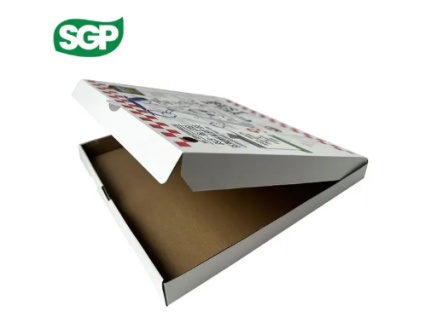
Recycling a pizza box sounds simple, but small habits make a big difference—especially because food packaging is one of the most common sources of contamination in paper recycling streams. The goal is to keep your cardboard as “paper-like” as possible so it can be sorted efficiently and processed with less interruption.
Here are practical steps that help your recycling work better:
Empty the box completely
Pizza leftovers, crusts, napkins, and dipping sauce residue should go to trash or compost (if available). Even small food pieces can attract pests and create odor in collection bins.
Shake out crumbs before placing it in the bin
A quick shake takes only a few seconds and helps keep your paper recycling cleaner for the next household and for the facility.
Flatten the box
Flattening saves space in your cart and helps sorting equipment handle cardboard more efficiently. If your community collects cardboard separately, flattening is still a good habit.
Avoid bagging recyclables
Many programs don’t want recycling inside plastic bags because bags can jam sorting lines and often get discarded as trash. Put the box loose in the bin unless your local guidelines say otherwise.
Skip “wish-cycling” items
Sauce cups, greasy liners, plastic dip containers, and mixed-material packs often don’t belong in paper recycling. When in doubt, keep the bin cleaner rather than adding questionable items.
A simple approach is to remember: clean cardboard is easier cardboard.
Pizza boxes have a tough job. They need to protect hot food during transport while still staying lightweight, stackable, and cost-effective. That is why the classic corrugated pizza box design remains widely used. Corrugated board offers strength and structure, but also supports airflow.
Pizza packaging typically needs to:
resist crushing during delivery so the pizza arrives intact
allow ventilation to reduce sogginess and keep the crust from steaming too much
handle heat and moisture without collapsing
stack efficiently for delivery and storage
protect the product without complicated materials that make disposal harder
The good news is that when pizza boxes are handled correctly after use—especially when emptied and kept reasonably clean—they can still fit into many recycling streams. For brands and restaurants, adding clear disposal guidance on the box (for example, “remove food and recycle if accepted locally”) can reduce confusion and encourage better consumer habits.
So, can you recycle a pizza box with grease on it? In many recycling programs, the answer is yes—if the box is empty and the grease is typical. The safest approach is to remove food scraps, flatten the box, and when the bottom is heavily soaked, recycle the clean lid and discard or compost the greasy portion based on local rules. This keeps recycling streams cleaner while still recovering valuable paper fiber where possible.
At SGP Packaging, we focus on practical packaging that works in real life—from food protection to easier handling and clearer consumer use. If you’re sourcing pizza box packaging or looking to improve packaging communication around disposal and recycling, you’re welcome to learn more from SGP Packaging. and contact us for product information and support.
In many areas, yes—if the box is empty and only has typical grease spots. Remove all food first.
A common best practice is to tear off the clean lid for recycling and discard or compost the greasy bottom depending on local rules.
If residue is minor and can be removed, many programs still accept the box. If there is heavy food stuck on, it’s often better to discard/compost that part.
Yes. Flattening helps collection efficiency and sorting, and it’s recommended in common recycling guidance.


